Skip to content

SonnePower vs Dasa: Mobile Machinery Controller Comparison
Table of Contents
In the field of mobile machinery, the electronic control system is often described as the “brain” of the equipment. Choosing the right mobile machinery controller supplier is crucial for efficiency, reliability, and safety. This article compares SonnePower and Dasa, analyzing their backgrounds, product focus, and technical features.
Company Overview
Dasa
Founded: 1989
Headquarters: Växjö, Sweden
Core Business: Intelligent systems for machine and attachment control, information management, and communication.
Key Products: Hardware and software developed in-house, plus solutions from partners such as STW.
Main Applications: Forestry operations, machine control, fleet management.
SonnePower
- Founded: 2007
- Headquarters: Changsha, China
- Core Business: Development and manufacturing of electronic control systems for mobile machinery.
- Key Products: Controllers, CAN-bus displays, I/O modules, keypads, electric motor systems.
- Application Areas: Construction machinery, sanitation vehicles, agricultural machinery, mining equipment, firefighting and rescue vehicles, port and logistics vehicles.
- Focus: High-integration control solutions for off-highway and special-purpose vehicles
| Category | SonnePower | Dasa |
|---|---|---|
| Founded | 2007 | 1989 |
| Headquarters | Changsha, China | Växjö, Sweden |
| Core Business | Development and manufacturing of electronic control systems for mobile machinery | Intelligent systems for machine and attachment control, information management, and communication |
| Key Products | Controllers, CAN-bus displays, I/O modules, keypads, electric motor systems | Self-developed hardware and software, complemented by products from strategic partners such as STW |
| Application Areas | Construction machinery, sanitation vehicles, agricultural machinery, mining equipment, firefighting and rescue vehicles, port and logistics vehicles | Forestry operations, machine control, fleet management |
| Focus | Integrated control solutions for off-highway and special-purpose vehicles | Originally developed for forestry, expanded to other industries requiring reliability and performance |
Product and Application Comparison
Dasa
Controllers
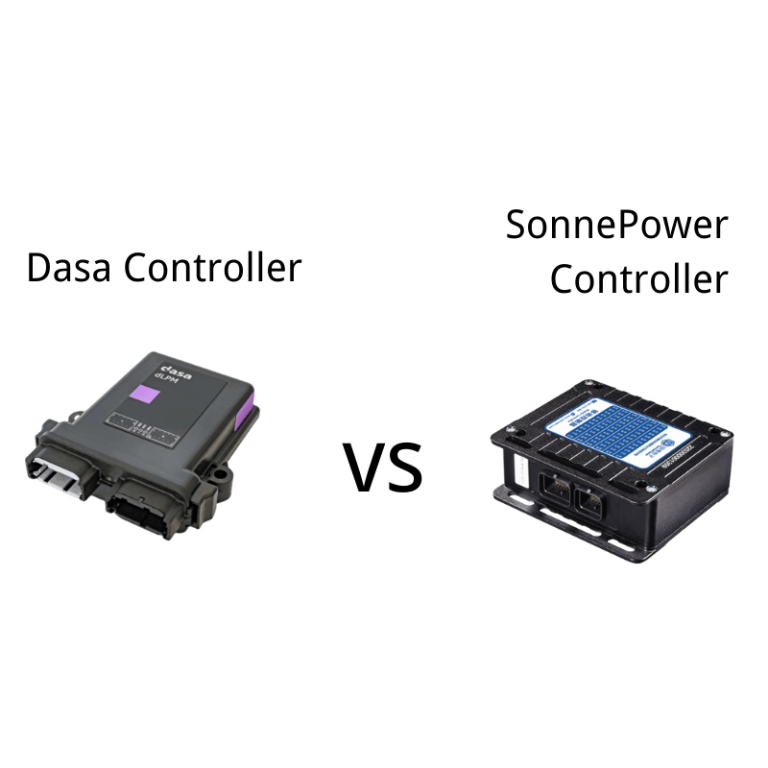
dLPM Controller – Low-power, programmable controller for standby and monitoring functions.
Wireless 1 – Wireless bucking control system.
Wired 7 – Cable-based bucking control system.
Other Products (Brief)
Software such as Forester Office, F30, FB15, and H70; hardware like IP Camera 120°, GPS Kit, and installation kits.
Typical Use Cases
Primarily forestry: bucking optimization, harvester head control, and forwarder management.
SonnePower
SonnePower Controllers
For example, SPC-SFMC-X3632A (high-performance) with 66 I/Os and multiple CAN channels.
SPC-SFMC-X2424A (medium-scale) with balanced I/O and communication for versatile machinery.
Features include fast boot, built-in diagnostics, multiple CAN protocols, and optional wireless connectivity.
Other Products
Displays, distributed I/O modules, keypads, and electric motor systems – forming complete integrated control solutions.
Typical Use Cases
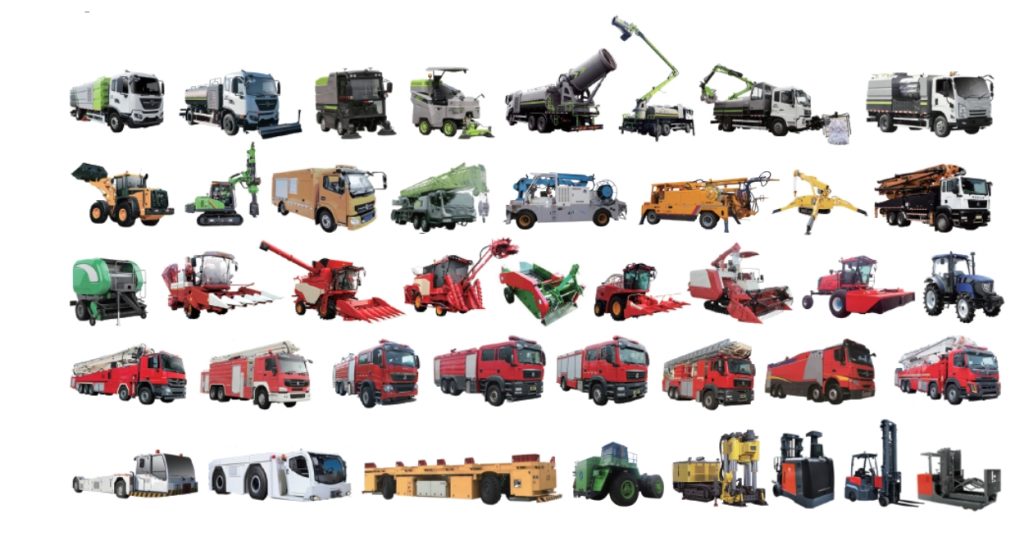
Used in construction, agriculture, sanitation, firefighting, mining, ports, airport ground support, aerial platforms, logistics, road machinery, oilfield equipment, AGVs, and hydrogen energy systems.
Controller Comparison: Dasa vs SonnePower
| Category | Dasa dLPM | SonnePower SPC-SFMC-X3632A |
|---|---|---|
| Size / Weight | 133 × 118 × 35 mm · 0.5 kg | 206 × 152 × 51 mm · 1.0 kg |
| Operating Environment | –40 ~ +70 °C · IP67 | –40 ~ +85 °C · IP67 |
| Supply Voltage | 10–30 VDC | 8–32 VDC |
| Power Consumption | Ultra-low standby: <5 mA (24 V) / <10 mA (12 V) | Not specified |
| Programming Platform | Freely programmable, pre-installed software supports communication | CoDeSys 3.5 / IEC-61131-3 |
| I/O Count | Up to 14 inputs / 12 outputs | Total 66 I/O (36 inputs / 32 outputs) |
| Communication Interfaces | 1 × CAN (J1939) | 3 × CAN (CANopen / J1939 / custom) + 1 × RS-232 |
| PWM / H-Bridge | 4 PWM outputs · 2 half-bridge outputs (can form full bridge) | 14 PWM-H · 4 PWM-L · 2 H-Bridge |
| Diagnostics & Protection | Not specified | Reverse polarity protection · Short-circuit / over-temperature protection · Open-circuit detection |
| Key Features | Ultra-low power · Always-on capability · Event triggering | High integration · Output multiplexing · Direct drive for solenoids · Status indicators · D+ function |
SonnePower Controller Advantages over Dasa
Broader Controller Portfolio
SonnePower provides a wider range of controllers, for example, SPC-SFMC-X3632A and SPC-SFMC-X2424A, covering large-scale and medium-scale needs. Dasa mainly offers low-power modules like dLPM.
Higher I/O Capacity
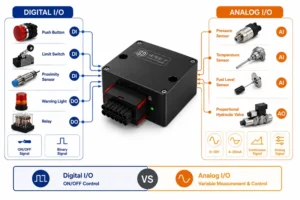
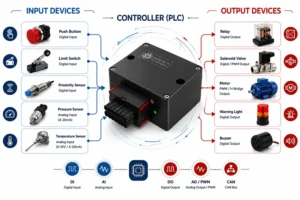
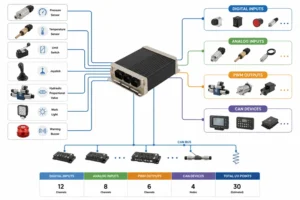
SonnePower controllers feature higher I/O counts, e.g., X3632A with 66 I/Os, while Dasa dLPM offers only up to 14 inputs and 12 outputs.
Richer Communication Interfaces
SonnePower supports multiple CAN channels plus RS-232, while Dasa usually has a single CAN.
Wider Industry Applications
SonnePower serves construction, agriculture, sanitation, mining, and more. Dasa’s solutions remain focused on forestry.
Diagnostics and Protection
SonnePower controllers provide built-in protection and diagnostics, while Dasa emphasizes ultra-low power usage.
FAQs
Q1. What industries use SonnePower controllers?
They are applied in construction, sanitation, agriculture, mining, firefighting, logistics, and other mobile machinery sectors.
Q2. Is Dasa focused only on forestry?
Dasa originated in forestry and still mainly serves forestry machinery, though some solutions also extend to machine control and fleet management.
Q3. How does the dLPM compare to the X3632A?
The dLPM is a low-power controller for standby and monitoring, while the X3632A is a high-integration controller with more I/Os and interfaces.
Q4. Are SonnePower controllers customizable?
Yes. SonnePower controllers support flexible I/O configuration, multiple protocols, and can be tailored to specific machinery requirements.
Conclusion
Dasa has long-standing expertise in forestry machinery control, while SonnePower focuses on broader mobile machinery applications with higher I/O capacity, richer interfaces, and built-in diagnostics. Both have their strengths, but for complex and diverse control needs, SonnePower provides a more comprehensive solution.