Guide to CAN Bus Keypad with Rotary Encoder for Machinery
Table of Contents
Modern mobile machinery — from tractors and sprayers to construction and mining equipment — relies on robust and intuitive operator interfaces. CAN Bus keypads with integrated rotary encoders have become a preferred solution for OEMs and system integrators because they simplify wiring, improve ergonomics, and offer software-programmable flexibility.
This guide will help you understand what a CAN Bus keypad with rotary encoder is, why it matters, and the key factors to consider when selecting one for your application.
What Is a CAN Bus Keypad with Rotary Encoder?
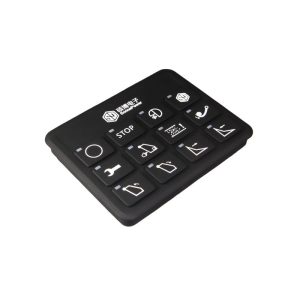
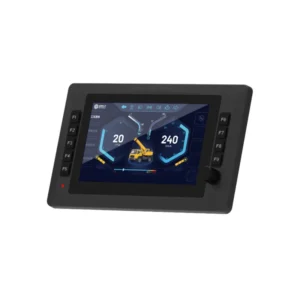
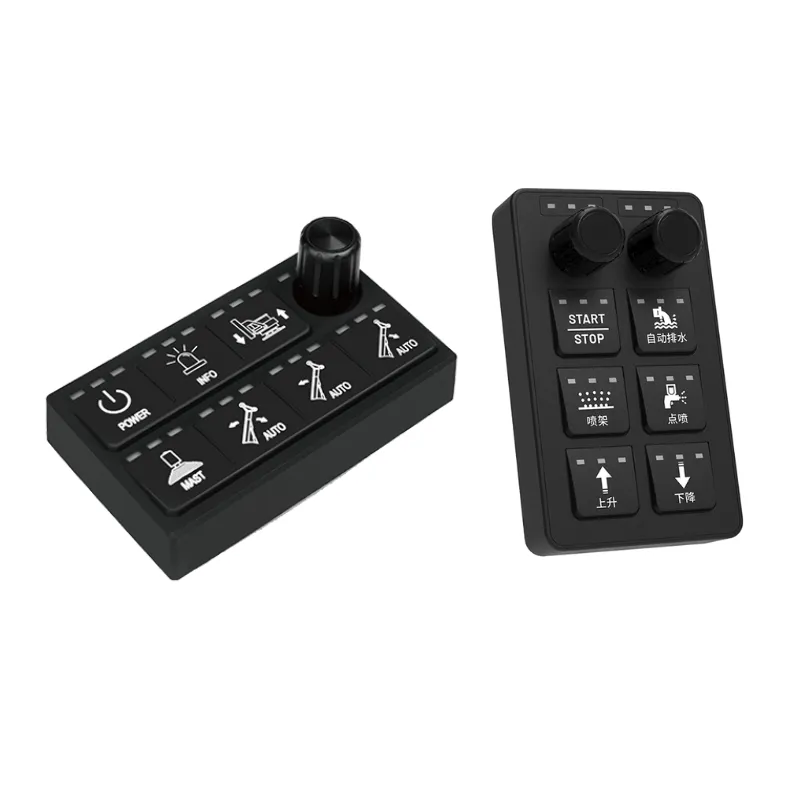
A CAN Bus keypad is a sealed, programmable switch panel that communicates digitally over the Controller Area Network (CAN) protocol. Instead of wiring each button individually, the keypad sends CAN messages (PGNs in J1939 or PDOs in CANopen) to the vehicle controller, dramatically reducing harness complexity.
A rotary encoder is a knob that detects rotation and often includes a push function. When integrated into a keypad, it allows operators to scroll through menus, adjust setpoints, or zoom in/out on displays — even while wearing gloves.
Why It Matters for Mobile Machinery
Mobile machinery operates in harsh, demanding conditions where reliability and usability are critical:
Rugged Environments: Equipment faces constant vibration, dust, water spray, and extreme temperatures. A sealed keypad with IP65/IP67 rating resists these challenges.
Operator Safety: Physical buttons and a tactile rotary encoder allow blind operation, reducing distraction compared to touchscreens alone.
Glove-Friendly: Encoders and large buttons remain easy to use with work gloves.
Multi-Function Control: One panel can combine multiple buttons, backlighting, and encoder input — saving space and simplifying layouts.
Reduced Wiring: CAN Bus reduces point-to-point wiring, lowers weight, and simplifies installation.
Looking for a CAN Bus Keypad with Rotary Encoder?
Our rugged CAN Bus keypads with integrated rotary encoder are IP67-rated, glove-friendly, and support SAE J1939 / CANopen protocols for reliable control in mobile machinery.
3. Key Selection Criteria
When specifying a keypad with rotary encoder, consider the following:
a. Environmental Protection
Ingress Protection: Look for IP65 or IP67 to resist dust and water jets.
UV & Chemical Resistance: Important for outdoor or agricultural applications.
Operating Temperature: Typical range −40 °C to +85 °C.
b. Durability & Feedback
Button Lifespan: Millions of actuations for reliable service life.
Rotary Encoder Life: Rated for many rotation cycles, with clear detents.
Backlighting & LED Feedback: Multi-color LEDs help operators identify status instantly.
c. Communication & Compatibility
Protocols: Ensure compatibility with SAE J1939, CANopen, or proprietary CAN protocols.
Node IDs & Baud Rates: Should be easily configurable via software or DIP switches.
d. Electrical Characteristics
Voltage Range: Must tolerate 9–32 VDC typical of mobile equipment.
EMC Compliance: Should meet ISO/IEC automotive EMC standards.
e. Mechanical Design
Mounting Options: Panel mount or snap-in design, with sealed connectors.
Cable & Connector Type: Deutsch, AMPSEAL, or M12 connectors for easy integration.
4. Standards and Certifications
Compliance ensures reliable operation and simplifies OEM approvals:
Ingress Protection: IEC 60529 (IP rating)
Vibration & Shock: IEC 60068 or MIL-STD-810
Electromagnetic Compatibility: ISO 7637, CISPR 25, or equivalent
CAN Protocol Compliance: Verified J1939 or CANopen stack compatibility
5. Common Applications
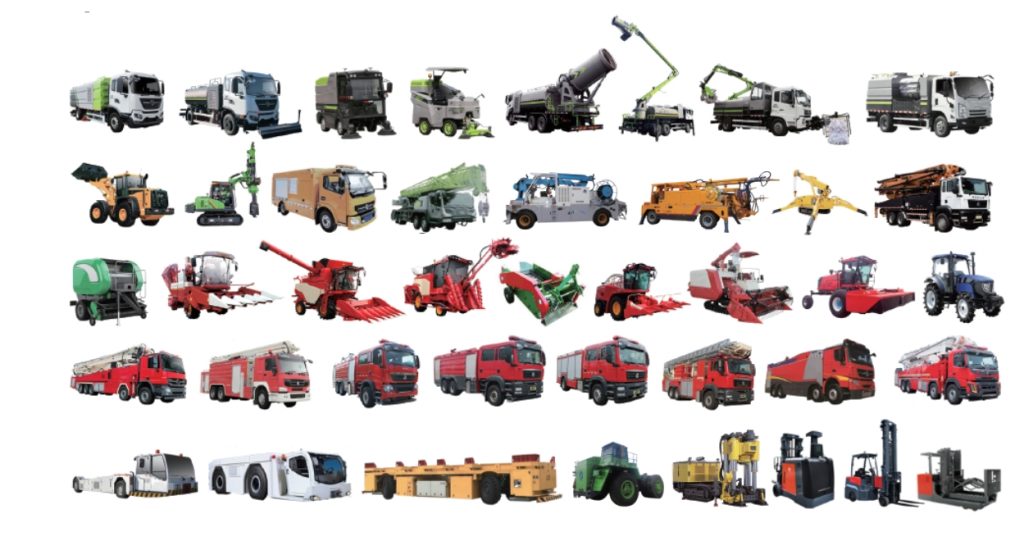
CAN Bus keypads with rotary encoders are widely used in:
Agricultural Machinery: Tractors, harvesters, sprayers, seeders
Construction Equipment: Excavators, loaders, cranes
Mining & Heavy Haul Trucks: Reliable control panels for harsh sites
Municipal Vehicles: Street sweepers, refuse trucks, fire and rescue equipment
Forestry & Off-Highway Machines: Where dust, mud, and vibration are constant
6. Integration Best Practices
To maximize reliability and operator satisfaction:
Panel Layout: Place the keypad where it is easy to reach and see.
Cable Routing: Avoid pinch points and ensure strain relief.
Software Mapping: Document all CAN messages, button functions, and encoder steps.
Testing: Validate functionality under vibration, temperature cycling, and EMC exposure before mass deployment.
7.Conclusion
A CAN Bus keypad with rotary encoder is a compact, rugged, and flexible solution for modern mobile machinery. By consolidating multiple controls into a single panel, it reduces wiring complexity, improves operator ergonomics, and increases machine uptime.
When selecting a keypad, focus on: Proper IP rating and rugged construction
Compatible CAN protocol support (J1939/CANopen)
Long mechanical life for buttons and encoder
Good tactile feedback and LED indication
Easy integration and software configurability
Investing in the right keypad solution results in safer, more efficient machine operation and lower lifecycle costs.