...
🇮🇹 Meet SonnePower at REAS 2026 in Italy   |   Oct. 8–10, 2026   |   Centro Fiera Montichiari   |   Pavilion 2 – Stand C9 🇮🇹 Meet SonnePower at REAS 2026 in Italy   |   Oct. 8–10, 2026   |   Centro Fiera Montichiari   |   Pavilion 2 – Stand C9

Local I/O vs Distributed I/O: Complete Guide (2025)

Table of Contents

In industrial automation, I/O (input/output) systems connect field devices—such as sensors and actuators—to PLC and DCS systems.The choice between local I/O and remote/distributed I/O significantly affects system latency, cost, scalability, and reliability.

This guide compares their architectures, strengths and trade-offs, and typical application scenarios to help engineers make informed design decisions and select the optimal I/O strategy for their PLC/DCS projects.

Definitions and Key Terms

Local I/O

I/O modules installed inside the main control cabinet or sharing the same backplane with the controller. Because signal cables are short, communication latency is minimal.

Remote I/O

I/O modules located away from the main controller and connected via an industrial communication network (e.g., Ethernet/IP, PROFIBUS, Modbus TCP, CANopen). These modules mainly handle signal acquisition and output without performing local control logic.

Distributed I/O

Similar to remote I/O, but each node contains local intelligence for data pre-processing, basic logic execution, or emergency actions, thereby improving overall system reliability and flexibility.

System Architecture Overview

Local I/O Architecture

All I/O modules are centrally installed inside the control cabinet, with the PLC or DCS controller executing all logic and handling every I/O signal.

Remote I/O Architecture

I/O modules are mounted near the field devices and communicate with the central controller over an industrial network, which reduces wiring complexity and minimizes cabinet space requirements.

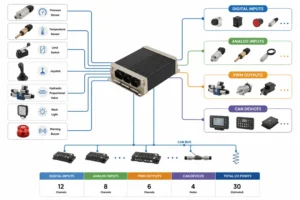
Distributed I/O Architecture

Each node contains local processing capability, enabling it to handle a share of the control logic or execute emergency routines independently, improving resilience and fault tolerance.

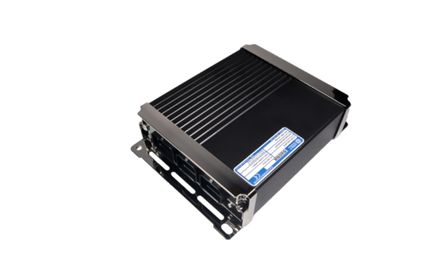
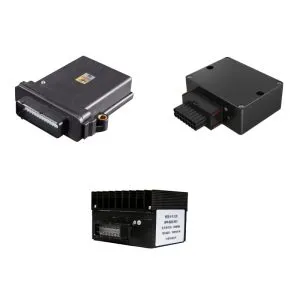
SPC-SFMC-X3632A

Feature Comparison Table

FeatureLocal I/ORemote I/ODistributed I/O
LatencyVery low (backplane communication)Some network delay presentMinimal latency thanks to local fast response
BandwidthHigh, simple backplane protocolDepends on network type and protocolSimilar to Remote I/O
ScalabilityLimited by cabinet slot capacityEasily expandable by adding remote stationsHighly flexible, supports decentralized control
ReliabilitySimple but single point of failureFaults are localized, partial operation possibleNodes operate independently, highest redundancy
CostLower initial cost, but more cablingHigher upfront cost (network modules & wiring)Highest cost, but easier long-term maintenance
Local IntelligenceNone or minimalNone, relies on central controllerIncludes local pre-processing and control logic

Application Scenarios and Selection Tips

Choose Local I/O when:

By adopting SonnePower’s mobile control systems for fire trucks, the customer achieved:

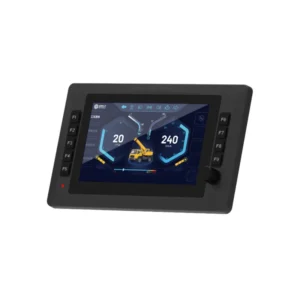
  • Centralized monitoring & control on one intelligent display
  • Increased automation, especially in foam mixing, reducing operator workload
  • Improved reliability, thanks to rugged distributed architecture and IP-rated components
  • Simplified operation, allowing firefighters to focus on extinguishing rather than manual adjustments

Choose Remote or Distributed I/O when:

  • I/O points are widely distributed or spread across multiple production lines or workshops.

  • Reducing long cable runs, lowering wiring costs, and simplifying maintenance is a priority.

  • Higher system reliability, fault tolerance, or partial operation during network failure is required.

  • There is a need to implement edge computing, distributed control, or data pre-processing near the field devices.

Design Considerations and Challenges

Network Latency and Bandwidth Planning

Ensure network cycle time and available bandwidth satisfy real-time performance requirements.

Protocol Compatibility

Verify that the I/O system supports the PLC/DCS protocol in use (EtherNet/IP, PROFINET, Modbus TCP, CANopen, etc.).

Environmental Factors

Account for temperature range, humidity, and IP rating (IP65/IP67) to ensure robust operation in harsh conditions.

Cybersecurity

Protect against unauthorized access, data tampering, and network attacks with secure configurations and firewalls.

Lifecycle Cost

Consider total cost of ownership, including hardware, cabling, spare parts, software licenses, and maintenance.

Conclusion & Call to Action

For compact, centralized systems, Local I/O still offers the simplest and most cost-effective solution with ultra-fast response.
However, for most modern production lines and mobile machinery, Distributed I/O is the smarter choice — delivering higher reliability, easier expansion, edge intelligence, and reduced downtime compared to purely centralized architectures.

📩 Looking for a rugged Distributed I/O solution?
SonnePower’s SDIO Series distributed I/O modules feature IP67 protection, wide temperature range (-40 °C to +85 °C), and CAN bus communication (SAE J1939 / CANopen) — ideal for harsh environments and mobile equipment.


👉 Contact our team to get datasheets, request a sample, or receive tailored recommendations for your PLC/DCS project.
Scroll to Top

Contact information

Write for us