 Skip to content

From Manual Operation to Smart Control in Mobile Equipment
Table of Contents
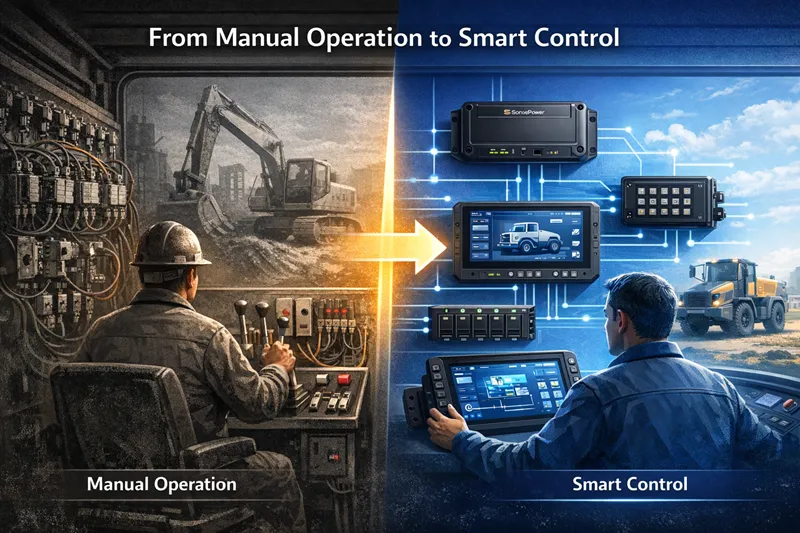
In the early days of mobile and off-highway equipment, machines relied almost entirely on manual operation. Operators controlled functions directly through mechanical levers, switches, and basic electrical logic. Productivity, safety, and performance were largely determined by individual experience.
As mobile machinery has evolved, this model has begun to reach its limits. Modern construction equipment, agricultural machines, mining vehicles, sanitation trucks, and other off-highway equipment are expected to perform multiple functions, operate reliably in harsh environments, and meet higher safety and efficiency standards.
This shift reflects the broader evolution of mobile machinery control systems, where intelligent control is becoming the foundation of modern off-highway equipment. As a result, the role of the operator is changing—from direct execution to supervising and interacting with increasingly intelligent systems.
Manual Operation: How Mobile Equipment Traditionally Worked
Traditional mobile equipment was designed around simplicity.
Functions were controlled through direct physical inputs, and control logic was commonly implemented using relay-based control systems, where machine behavior depended on hard-wired logic and operator experience. In these early setups, operators were not only executing actions, but also responsible for sequencing operations, interpreting machine responses, and reacting to abnormal conditions in real time.
As discussed in our analysis of why intelligent control is replacing relay-based systems in mobile machinery, this approach worked well when machines had limited functions, fixed operating modes, and minimal interaction between subsystems. In such environments, human judgment effectively compensated for the lack of system intelligence.
However, as mobile equipment evolved in complexity and operational demands increased, the limitations of relay-centric, manually driven control became increasingly difficult to ignore.
The Limits of Manual Control in Modern Mobile Machinery
As machines became more capable, the limitations of manual control became increasingly evident.
Increasing Machine Complexity
Modern mobile machinery integrates hydraulics, electrical systems, safety logic, auxiliary equipment, and electronic interfaces. Managing this complexity through manual operation places a significant cognitive burden on operators.
Without structured control logic, performance depends heavily on individual skill rather than system consistency.
Operator Fatigue and Inconsistency
Manual operation relies on constant attention and physical input. Fatigue, stress, and varying training levels result in inconsistent performance between operators and across shifts.
In fleet operations, this inconsistency leads to unpredictable efficiency, higher wear, and increased operational risk.
Safety and Downtime Risks
Misoperations, delayed responses, and limited system feedback increase the risk of equipment damage and safety incidents. In off-highway environments, even small failures can result in significant downtime and service costs.
The Shift Toward Smart Control
To address these challenges, the industry has moved toward smart control.
Smart control does not mean full automation. Instead, it represents a shift toward structured logic, system-assisted operation, and clearer human–machine interaction. This transition aligns with broader industry trends in mobile machinery control driven by digitalization, integration, and higher operational demands.
Rather than replacing operators, smart control supports them—allowing machines to handle complexity consistently while humans focus on supervision and decision-making.
What Smart Control Means in Mobile Equipment
Assisted Operation
Smart control systems enable assisted operation by automating routine sequences, enforcing operating conditions, and preventing unsafe actions. These features reduce operator workload while improving consistency and safety.
Centralized and Programmable Logic
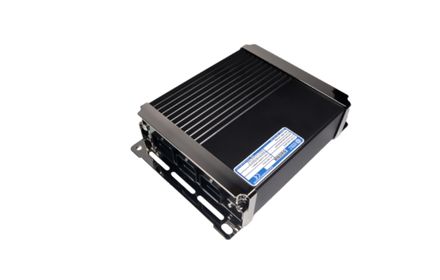
Instead of relying on hard-wired logic and manual sequencing, smart control systems use a centralized control architecture. Control logic is implemented in industrial vehicle controllers designed for harsh mobile environments.
This architecture makes machine behavior predictable, repeatable, and scalable across different models and applications.
To support scalability and reduce wiring complexity, many systems also incorporate distributed I/O modules connected via CAN-based networks.
Evolving Human–Machine Interfaces
As control logic becomes more intelligent, human–machine interfaces evolve accordingly.
Modern rugged displays provide operators with real-time system status, diagnostics, and alarms, improving situational awareness. At the same time, physical control keypads remain essential for critical functions where tactile feedback and reliability are required.
Together, these interfaces help operators understand machine behavior quickly and respond with confidence.

Benefits of Smart Control for OEMs and Operators
The transition from manual operation to smart control delivers value across the entire equipment lifecycle.
For OEMs, smart control enables:
Faster development through reusable platforms
Consistent behavior across machine models
Easier future upgrades through software configuration
For operators and fleet owners, benefits include reduced training time, standardized operation, improved safety, and lower downtime.
Addressing the Labor Skill Gap
One of the most significant challenges facing the industry today is the shortage of experienced operators. Smart control helps bridge this gap by embedding operational logic and safeguards directly into the system.
As a result, less experienced operators can achieve consistent performance more quickly, reducing dependency on individual expertise and lowering operational risk.
The Maturity Path: From Manual Operation to Smart Control
| Feature | Stage 1: Manual / Relay | Stage 2: Assisted / Smart | Stage 3: Semi-Autonomous |
|---|---|---|---|
| Control Logic | Fixed, hard-wired | Programmable and adaptive | Data-driven and predictive |
| Operator Role | Physical operation | Supervision and decision-making | System management |
| Diagnostics | Manual inspection | On-board HMI diagnostics | Predictive and remote |
| Efficiency | Operator-dependent | Standardized | Optimized |
This model helps OEMs assess where their current platforms stand and what capabilities are required for the next stage.
From Smart Control to Future Automation
Smart control forms the foundation for future automation.
Capabilities such as system monitoring, diagnostics, and rule-based control are essential building blocks for assisted operation and higher levels of automation. Rather than a sudden leap, the industry is following a gradual path—using smart control to improve today’s operations while preparing for future technologies.
Conclusion – A Natural Evolution, Not a Technology Trend
The transition from manual operation to smart control in mobile equipment is not driven by technology fashion. It is a practical response to increasing machine complexity, labor challenges, higher safety expectations, and the need for consistent operation.
As part of modern mobile machinery control systems, smart control represents a natural evolution—one that enhances human capability and defines the future direction of off-highway equipment.