 Skip to content

Practical Guide to I/O Planning for Mobile Machinery
Table of Contents
Trends in Mobile Machinery Control Systems
Mobile machinery across construction, agriculture, mining, and municipal services is undergoing rapid transformation. Machines are expected to be more efficient, safer, easier to operate, and ready for future automation—all while operating in harsh environments.
At the center of this transformation lies the mobile machinery control system.Understanding how control systems are evolving is no longer just a technical concern—it has become a strategic consideration for OEMs, system integrators, and engineering teams planning next-generation equipment.
This article explores the key trends shaping modern mobile machinery control systems and offers insight into what future-ready control systems are beginning to look like.
From Relay-Based Control to Intelligent Electronic Systems
For decades, relay-based electrical systems were widely used in off-highway machinery due to their simplicity and familiarity. However, as machines have grown more complex, the limitations of relay logic have become increasingly apparent.
Traditional relay systems often suffer from:
Complex and bulky wiring
Limited flexibility for functional changes
Difficulty supporting diagnostics and fault detection
Modern electronic control systems replace hardwired logic with software-defined control, allowing functions to be configured, updated, and expanded without redesigning the entire electrical system.
This transition is not simply a technology upgrade—it represents a fundamental shift toward smarter, cleaner, and more maintainable machine design.

Digitalization and Connectivity as Core Drivers
Mobile machinery is no longer isolated equipment operating independently in the field. Digitalization is pushing machines into connected ecosystems where data plays a central role.
Key developments include:
Continuous data collection from controllers and sensors
Remote monitoring of machine status and performance
Predictive maintenance based on operational patterns
In this context, the control system becomes the data backbone of the machine.
Without a capable control architecture, advanced connectivity and telematics functions cannot be reliably implemented.
As digital platforms expand, control systems are increasingly expected to support both real-time control and data-driven decision-making.
Modular and Integrated Control Architectures
Another defining trend is the move toward modular and integrated control system architectures.
Rather than managing separate control units for each function, modern machines increasingly rely on unified platforms that integrate:
Distributed I/O and communication networks
Modular architectures allow OEMs to reuse control platforms across different machine models while maintaining flexibility. This approach simplifies development, reduces wiring complexity, and improves overall system reliability.
Electrification and Its Impact on Control Systems
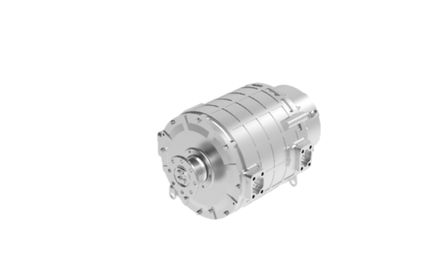
Electrification is emerging as a long-term trend in off-highway machinery, driven by sustainability goals, efficiency requirements, and noise reduction needs.
As machines adopt hybrid or fully electric powertrains, control systems must evolve to coordinate:
Energy storage systems
Electric motors and drives
Power distribution and energy management
This shift places new demands on control systems, which must manage electrical, hydraulic, and mechanical subsystems simultaneously.
In electrified machines, the control system becomes the central coordinator of energy and motion.
Higher Safety and Reliability Expectations
Safety has always been a critical concern in mobile machinery, but expectations are continuing to rise.
Modern control systems contribute to improved safety by enabling:
Fault detection and diagnostic capabilities
Safe-state operation during abnormal conditions
Logical interlocks and condition-based control
As machines operate in increasingly complex and hazardous environments, control systems are expected to actively prevent unsafe situations, not merely respond to failures after they occur.
Human–Machine Interaction: Beyond Basic Interfaces
The evolution of control systems is also reshaping how operators interact with machines.
Key trends in human–machine interaction include:
Clearer visualization through advanced displays
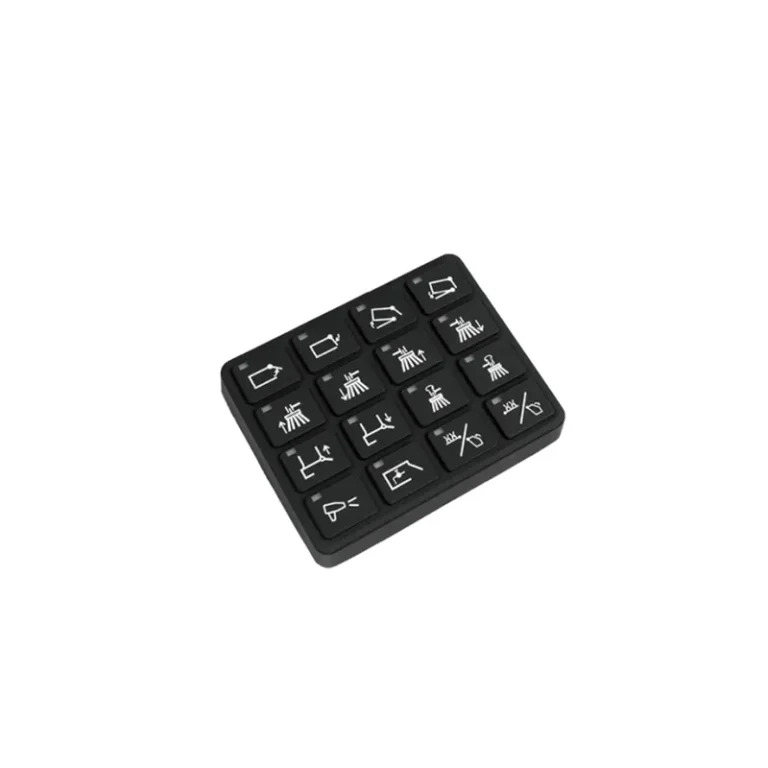
Continued reliance on physical control keypads for critical functions
Hybrid HMI designs combining tactile input and graphical interfaces
In harsh working conditions, physical keypads remain essential due to their reliability, tactile feedback, and ease of use with gloves or in poor visibility.
Effective HMI design directly impacts operator efficiency, safety, and comfort.
Toward Intelligent and Assisted Operation
As control systems become more capable, mobile machinery is gradually moving toward assisted and semi-automated operation.
Emerging capabilities include:
Automated function sequencing
Operator assistance features
Data-supported decision logic
While full autonomy depends heavily on application context, intelligent control functions are increasingly common in modern off-highway equipment.
Future Outlook for Mobile Machinery Control Systems
Looking ahead, several themes are likely to define the next stage of control system development:
Greater system integration across platforms
Increased reliance on software-defined functionality
Deeper connectivity and data utilization
Continued focus on robustness for harsh environments
Future-ready control systems will be those designed not only for current requirements, but also for adaptability and long-term evolution.
Conclusion
Trends in mobile machinery control systems reflect broader changes across the off-highway equipment industry. As machines become smarter, more connected, and more complex, control systems are evolving from basic functional components into strategic enablers of performance and innovation.
For OEMs and system integrators, understanding these trends is essential when planning next-generation machine designs.
Apply These Trends to Your Next Machine Design
Exploring how these control system trends may affect your next machine design?
Discuss your application requirements with SonnePower and request samples for evaluation to validate system performance in real-world conditions.