 Skip to content

What Is a CAN Bus Module?
Table of Contents
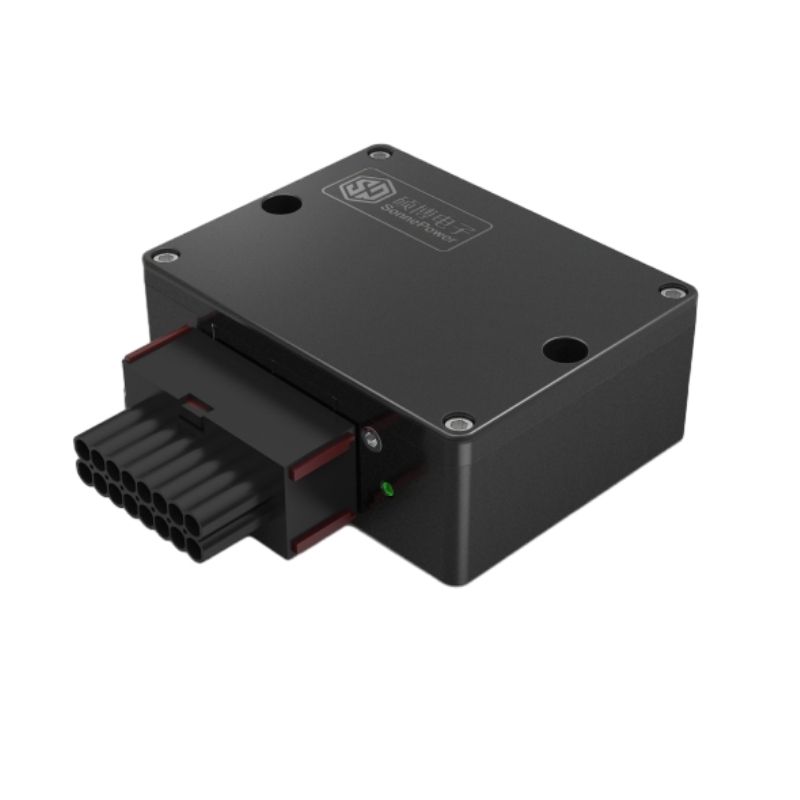
A CAN bus module is a functional device connected to a Controller Area Network (CAN), designed to exchange data with other devices such as controllers, displays, sensors, and actuators.
It is widely used in vehicles, mobile machinery, and industrial control systems to enable reliable, real-time communication between distributed system components.
Rather than acting as a central controller, a CAN bus module typically performs a specific function within a larger system, such as signal acquisition, output control, or human–machine interaction.
What Is CAN Bus?
CAN Bus Definition
CAN (Controller Area Network) is a robust communication protocol originally developed for automotive applications.
It allows multiple electronic devices—known as nodes—to communicate with each other over a shared network without the need for a central host.
CAN bus is designed for environments where:
-
Electrical noise is common
-
Real-time data exchange is required
-
High reliability is critical
Because of these characteristics, CAN bus has become a standard communication backbone not only in road vehicles, but also in off-highway and industrial machinery.In a CAN-based distributed control system, different functional nodes work together — including controllers, displays, and CAN I/O modules.

How CAN Bus Communication Works?
In a CAN network:
All connected devices listen to the same bus
Messages are broadcast rather than sent point-to-point
Each message carries an identifier that defines its priority
This architecture allows the system to remain stable and predictable, even when multiple devices transmit data simultaneously.
Importantly, CAN bus focuses on message-based communication, not device addressing, which makes it well suited for modular and distributed systems.
What Is a CAN Bus Module?
CAN Bus Module Definition
A CAN bus module is any electronic module that:
Connects directly to a CAN network
Communicates using the CAN protocol
Performs a dedicated function within the system
In practice, a CAN bus module acts as a functional node on the network. It does not replace the main controller, but supports it by handling localized tasks and exchanging data through the CAN bus.
CAN Bus vs. CAN Bus Module
It is important to distinguish between these two concepts:
CAN bus refers to the communication network itself
CAN bus module refers to a device connected to that network
The CAN bus provides the communication pathway, while CAN bus modules are the devices that use it to send and receive information.
What Does a CAN Bus Module Do?
Data Collection
Many CAN bus modules are responsible for collecting data from:
Sensors
Switches
Status signals
This data is then transmitted over the CAN network to a central controller or display for processing and visualization.
Control and Output
CAN bus modules can also control outputs, such as:
Valves
Relays
Motors or actuators
By placing these modules close to the controlled devices, systems can reduce wiring complexity and improve response reliability.
Communication Between Devices
In a distributed control system, CAN bus modules serve as communication intermediaries.
They exchange real-time data with controllers, displays, and other modules, allowing the entire system to operate as a coordinated whole.
Types of CAN Bus Modules
In a CAN-based system, different devices perform different roles, but all CAN bus modules share one common characteristic:
they communicate with other components over the CAN network as independent functional nodes.
CAN Controller Modules
CAN controller modules act as the central logic units in a CAN-based system.
They process data received from other CAN bus modules, execute control strategies, and coordinate system behavior by transmitting and receiving CAN messages.
These modules are commonly used as the main control units in vehicles, mobile machinery, and industrial equipment.

CAN I/O Modules
CAN I/O modules handle digital and analog inputs and outputs and serve as the interface between traditional sensors or actuators and the CAN network.
They allow signals to be collected and controlled locally, without routing all wiring back to a central cabinet.
By converting field signals into CAN messages, CAN I/O modules enable distributed control architectures and reduce wiring complexity.
CAN Display Modules
CAN display modules provide human–machine interfaces (HMI) within a CAN-based system.
They receive system data via the CAN bus and allow operators to monitor operating status, view alarms, and send commands to the controller.
Because they communicate directly over CAN, display modules function as independent nodes rather than passive screens.

CAN Keypad Modules
CAN keypad modules are operator input devices designed for CAN networks.
They convert button presses or key inputs into CAN messages, enabling reliable and deterministic command input in vehicles and mobile machinery.
These modules are often used in harsh environments where simple, rugged input devices are required.
CAN Communication Modules
Some CAN bus modules focus primarily on communication tasks.
These modules manage data exchange between different CAN networks or interface CAN with other communication systems, acting as gateways or network bridges.
Why Are CAN Bus Modules Used?
Reduced Wiring Complexity
By distributing control functions across multiple CAN bus modules, systems can significantly reduce wiring length and complexity.This is especially important in large vehicles and mobile machinery.
Reliability in Harsh Environments
CAN technology was designed for harsh operating conditions.
Its noise immunity and fault-tolerant behavior make CAN bus modules suitable for environments involving vibration, moisture, dust, and temperature variation.
Scalability and Flexibility
CAN bus modules allow systems to be expanded or modified with minimal redesign.
New modules can be added to the network without major changes to the existing architecture.
CAN Bus Standards and Protocols
ISO 11898
ISO 11898 defines the physical and data link layers of the CAN protocol.
It ensures interoperability and reliability across CAN-based systems.
CANopen
CANopen is a higher-layer protocol commonly used in industrial and mobile machinery applications.
It standardizes device profiles and communication behavior on top of CAN.
CAN FD
CAN FD (Flexible Data Rate) extends classical CAN by allowing higher data rates and larger payloads, supporting modern system requirements.
Conclusion
A CAN bus module is a functional device connected to a CAN network, responsible for collecting data, controlling outputs, or enabling interaction within a distributed system.
By leveraging CAN communication, these modules support reliable, scalable, and efficient control architectures in vehicles, mobile machinery, and industrial applications.