 Skip to content

Is CAN Bus the Same as PROFIBUS?
If you are asking whether CAN bus is the same as PROFIBUS, the direct answer is no. They are different industrial communication systems built on different architectures, used in different environments, and designed around different communication models.
CAN is a bus technology widely used in vehicles, embedded control, and mobile machinery, while PROFIBUS is a fieldbus system that became widely used in factory automation and PLC-based control networks.
The reason this question keeps coming up is simple: many engineers, buyers, and system integrators accidentally compare things that are not on the same layer. In practice, people often mix up CAN, CANopen, PROFIBUS, and even PROFINET in the same conversation, then try to decide which one is “better.”
That usually leads to the wrong conclusion, because the first real question is not “which is better,” but “what exactly am I comparing?”
This article explains the difference clearly, shows where engineers most often get confused, and helps you decide when CAN-based systems make sense, when PROFIBUS is still relevant, and when you may need a gateway instead of a redesign.
The Short Answer: CAN Bus and PROFIBUS Are Not the Same
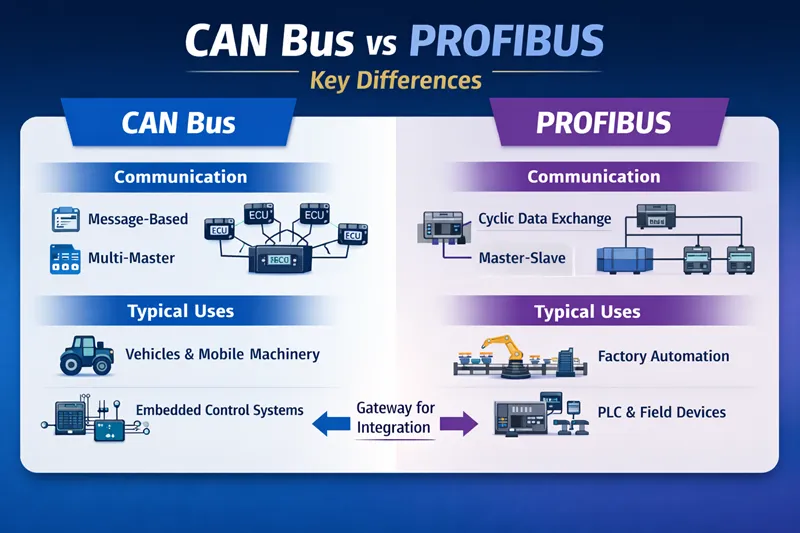
CAN bus and PROFIBUS are separate communication technologies. CAN was originally developed for reliable communication between electronic control units, especially in automotive and embedded systems. PROFIBUS was developed as an industrial fieldbus standard for automation, especially in PLC-centered factory environments. They differ in communication method, network structure, common device ecosystem, and integration style.
So if your team is debating whether a machine, controller, display, or I/O module should “use CAN or PROFIBUS,” the answer is not that they are interchangeable. The answer depends on the control architecture, host system, installed base, diagnostic requirements, and whether you are working in mobile equipment or fixed industrial automation.
Why So Many People Get This Wrong
The biggest mistake is layer mixing.
Many articles compare:
CAN bus
CANopen
PROFIBUS
PROFINET
DeviceNet
as if they were all the same kind of thing. They are not. Some are lower-level bus technologies, some are higher-layer communication protocols, and some belong to different industrial ecosystems entirely. That is why a simple “A vs B” comparison often creates more confusion than clarity.
A better way to think about it is this:
CAN bus = the underlying communication bus
CANopen = a higher-layer industrial protocol built on CAN
PROFIBUS = a separate fieldbus family used in industrial automation
PROFINET = an Ethernet-based industrial communication system, not the same generation or structure as PROFIBUS
Once you separate those layers, the comparison becomes much easier.
What Is CAN Bus?
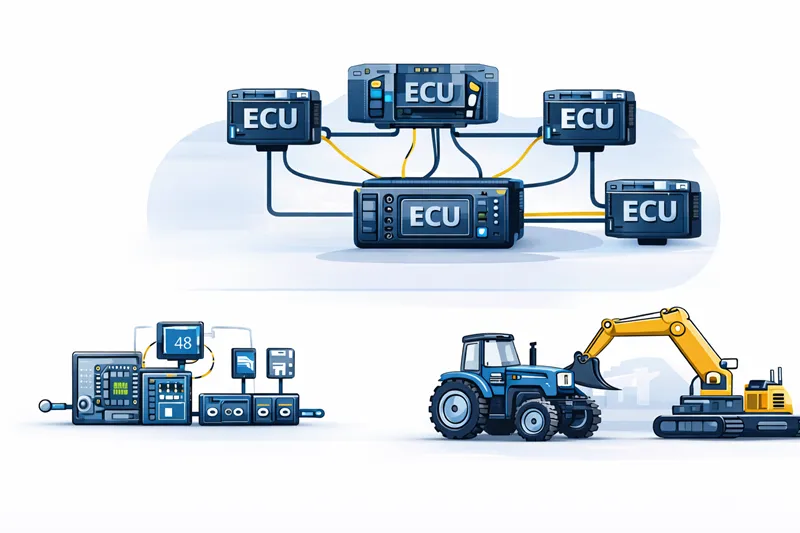
CAN bus, short for Controller Area Network, is a message-based communication bus designed for reliable distributed control. It became widely used in automotive electronics and later spread into many embedded and industrial applications because it is robust, efficient, and well suited for decentralized devices that need to exchange relatively compact messages in real time.
In practical engineering terms, CAN bus is often a strong fit when you need:
distributed controllers
rugged communication in electrically noisy environments
compact embedded nodes
efficient communication between ECUs, displays, sensors, and I/O modules
machine architectures where simplicity, reliability, and cost matter
That is one reason CAN remains common in mobile machinery, off-highway vehicles, agricultural equipment, and other machine-control scenarios.
What Is CANopen?
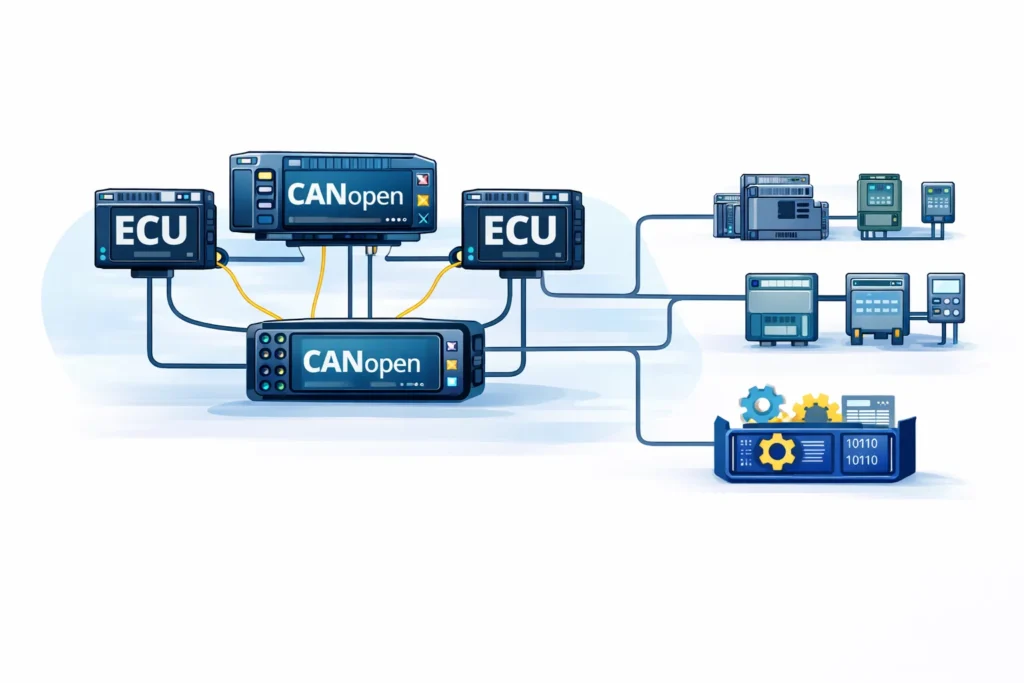
CANopen is not the same thing as CAN bus. CANopen is a higher-layer protocol built on top of CAN. It defines standardized device communication profiles, object dictionaries, and communication services so that devices can exchange structured data in a more interoperable way.
This matters because many engineers say “CAN” when they actually mean “CANopen.” But if you are comparing CANopen with PROFIBUS, that is a different discussion from comparing raw CAN bus with PROFIBUS.
In real projects, that distinction affects:
device compatibility
commissioning method
data mapping
diagnostic strategy
gateway selection
If you skip that distinction, your comparison article or buying decision will usually be too shallow to help.
What Is PROFIBUS?
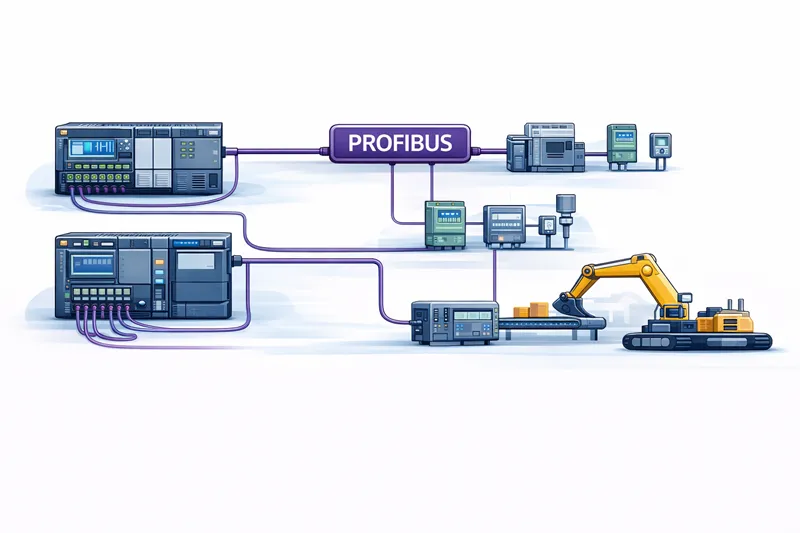
PROFIBUS is an industrial fieldbus system developed for automation environments, especially those built around PLCs and distributed field devices.
The official PROFIBUS organization describes it as a standardized communication system for field-level automation, with PROFIBUS DP becoming especially important for communication between controllers and decentralized peripherals.
In plain language, PROFIBUS became popular because it gave factories a proven way to connect controllers, remote I/O, drives, and other industrial devices in structured automation networks.
It was particularly strong in traditional industrial automation ecosystems and remains relevant in many installed systems, even as Ethernet-based industrial networks expanded.
So when someone asks, “Is CAN bus the same as PROFIBUS?”, what they are really comparing is often:
embedded/machine bus thinking
versusplant automation/PLC network thinking
That is a much more useful way to frame the question.
CAN Bus vs PROFIBUS: The Real Technical Difference
The most useful comparison is not “which sounds more industrial,” but how each one behaves in real systems.
1. Communication philosophy
CAN is fundamentally message-oriented and commonly associated with distributed device communication where arbitration and efficient message exchange are important. PROFIBUS DP is more strongly associated with cyclic data exchange between a controller and field devices in automation systems.
In practice, this affects how engineers think about:
refresh behavior
control loops
device access
troubleshooting flow
integration with host controllers
2. Typical ecosystem
CAN and CANopen are common in:
vehicles
mobile machinery
embedded control devices
compact machine networks
PROFIBUS is strongly associated with:
PLC-based automation
factory networks
legacy installed industrial systems
Siemens-centered or PLC-centered environments
3. Device and architecture fit
If your architecture revolves around a rugged controller, display, keypad, I/O module, and distributed intelligent devices on a machine, CAN-based communication often feels natural. If your system revolves around plant automation, centralized PLC logic, and factory field devices, PROFIBUS may be the more familiar fit.
4. Maintenance and migration behavior
This is where many top-ranking articles stay too theoretical. Engineers do not only care about bus speed or protocol names. They care about:
how long commissioning will take
how easy fault isolation will be
whether spare parts are easy to source
whether the existing installed base can remain in place
how painful future expansion will be
That is why “better” is the wrong word. The right word is fit.
Which One Is Better for Mobile Machinery?
For mobile equipment and off-highway machinery, CAN-based communication is often the more natural choice because the architecture is distributed, the nodes are embedded, and the environment demands robust, compact, machine-level communication. This aligns with how CAN is widely used in vehicle and machine electronics.
In other words, if you are working on:
excavators
harvesters
sweepers
forklifts
fire trucks
mining machines
municipal vehicles
the question is usually not “Should I replace CAN with PROFIBUS?” but rather:
Do I need plain CAN or CANopen?
Do I need J1939 or another higher-layer protocol?
Does the machine need to communicate with a PLC or factory system later?
That is a much more realistic engineering path.

When a Gateway Is the Wrong Fix
A gateway may be the wrong choice when:
you are building a new system from zero
protocol conversion adds unnecessary complexity
maintenance staff will struggle to diagnose conversion-layer issues
future expansion will require more data than the gateway layer can manage cleanly
the architecture is being forced to preserve an outdated boundary that no longer makes sense
In those cases, the better answer may be to redesign the communication structure rather than forcing two different systems to coexist.
Can CAN Devices Connect to a PROFIBUS Network?
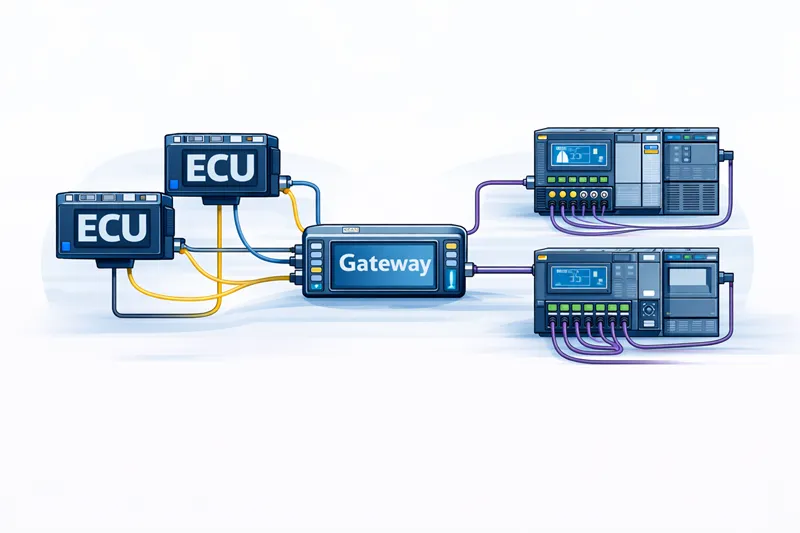
Yes, they can, but usually through a gateway or protocol converter, not because the two systems are inherently the same.
The PROFIBUS ecosystem includes products specifically intended for integration between CAN-based systems and PROFIBUS/PROFINET networks, which confirms that interoperability is typically achieved through conversion rather than native equivalence.
This is a key real-world point.
If you already have CAN-based devices and need them to exchange data with a PLC-side PROFIBUS network, a gateway may be the right solution when:
the installed CAN devices are staying
the host automation network is fixed
data exchange scope is limited and well defined
full redesign is too expensive
But a gateway is not automatically the best solution. Sometimes it only postpones a deeper architecture problem.
When a Gateway Is a Good Idea
A CAN-to-PROFIBUS gateway makes sense when:
you only need a defined data interface
the number of mapped signals is manageable
the timing requirements are understood
you are integrating two existing systems rather than building a new one from scratch
In this kind of project, the real engineering work is often not the cable connection. It is:
signal mapping
object or register alignment
refresh cycle planning
diagnostics strategy
fault handling between two different communication worlds
That is exactly the type of practical detail many ranking articles fail to explain.
Five Common Mistakes Engineers Make
Mistake 1: Treating CAN and CANopen as the same term
They are related, but they are not identical. CAN is the bus; CANopen is a higher-layer protocol on top of it.
Mistake 2: Comparing different protocol layers
Comparing CAN bus directly to PROFIBUS without clarifying whether the real question is about CANopen, device profiles, PLC integration, or machine architecture often leads to weak conclusions.
Mistake 3: Thinking the protocol with the “better spec” always wins
A system is chosen by architecture fit, ecosystem, maintainability, and integration cost, not only by headline technical claims.
Mistake 4: Ignoring installed-base reality
A brownfield PROFIBUS plant may keep PROFIBUS for excellent business reasons, even if another communication method looks attractive on paper.
Mistake 5: Using a gateway without planning diagnostics and mapping
Protocol conversion projects fail in practice when the team underestimates mapping, refresh logic, exception handling, and troubleshooting workflow. The gateway solves physical connection, not all system-level complexity.