 Skip to content

Baggage Tractor Electric Control System Solution
Table of Contents
In airports, railway stations, factories, and other logistics environments, baggage tractors play an important role in cargo transfer, short-distance towing, and high-frequency dispatching.
As the logistics industry continues moving toward intelligence and electrification, traditional equipment is becoming less capable of meeting the demands for high efficiency, low energy consumption, and reliable safety.
As one of the core technologies of a baggage tractor, the electric control system directly determines vehicle response speed, operating stability, energy efficiency, and safety performance.
A mature baggage tractor electric control system not only enables precise vehicle control, but also helps OEMs and end users improve operating efficiency, reduce maintenance costs, and support the upgrade toward smart logistics.
What Is a Baggage Tractor Electric Control System?
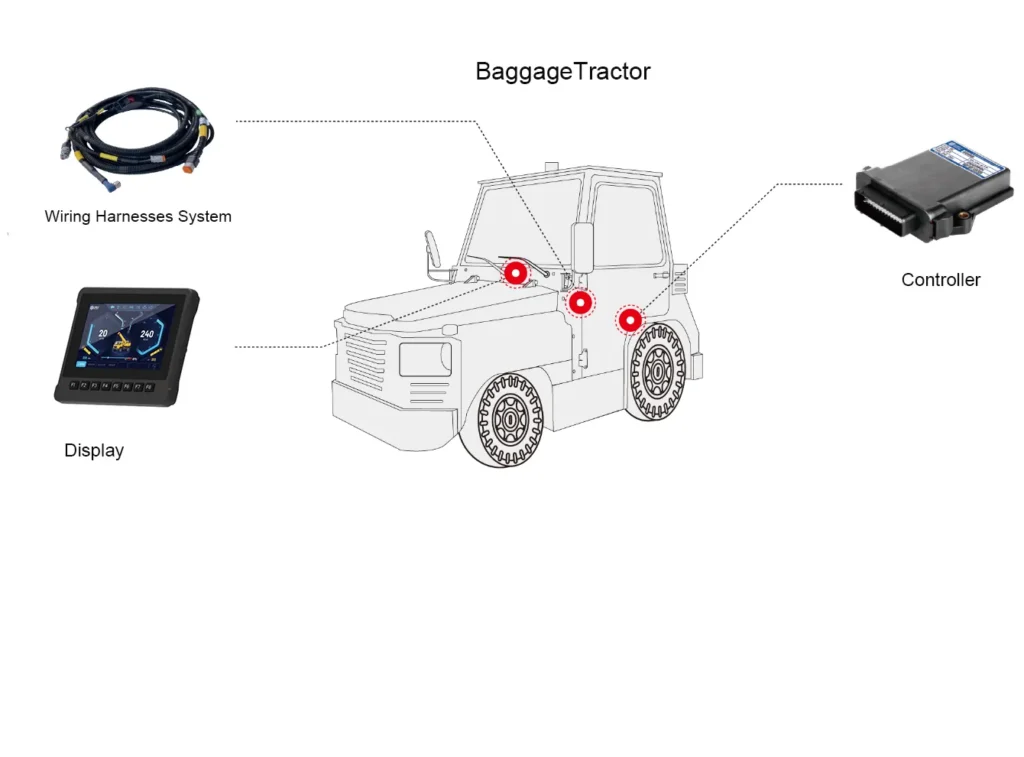
A baggage tractor electric control system is a complete intelligent control solution built around the vehicle controller, display, drive system, battery management system, as well as various sensors and actuators. It functions as the “brain” and “nervous system” of the vehicle, responsible for collecting operating data, processing commands, coordinating power output, and monitoring vehicle performance and faults.
In modern electric baggage tractors, the control system usually needs to perform the following tasks:
Control vehicle start, acceleration, deceleration, and braking
Coordinate the operation of the drive motor and steering system
Monitor battery status and energy consumption
Enable fault diagnosis and safety protection for the whole vehicle
Support human-machine interaction and operating status display
Meet the requirements of continuous operation in airports, stations, factories, and other demanding environments
Therefore, for vehicle manufacturers, system integrators, and logistics equipment operators, choosing a stable, efficient, and scalable baggage tractor electric control system solution is a crucial step toward product upgrade and stronger market competitiveness.
Core Components of a Baggage Tractor Electric Control System
A complete baggage tractor electric control system is typically composed of several key hardware and software modules working together.
1. Vehicle Control Unit (VCU)
The VCU is the control core of the system. It is responsible for real-time analysis of throttle, brake, gear, and other signals, then making logic decisions and output control commands based on the operating condition. It directly affects vehicle starting smoothness, acceleration response, and overall coordination.
A high-performance VCU helps the baggage tractor maintain stable output under frequent start-stop cycles, low-speed precision control, and heavy-load towing conditions, making it especially suitable for airport ground handling and factory logistics.

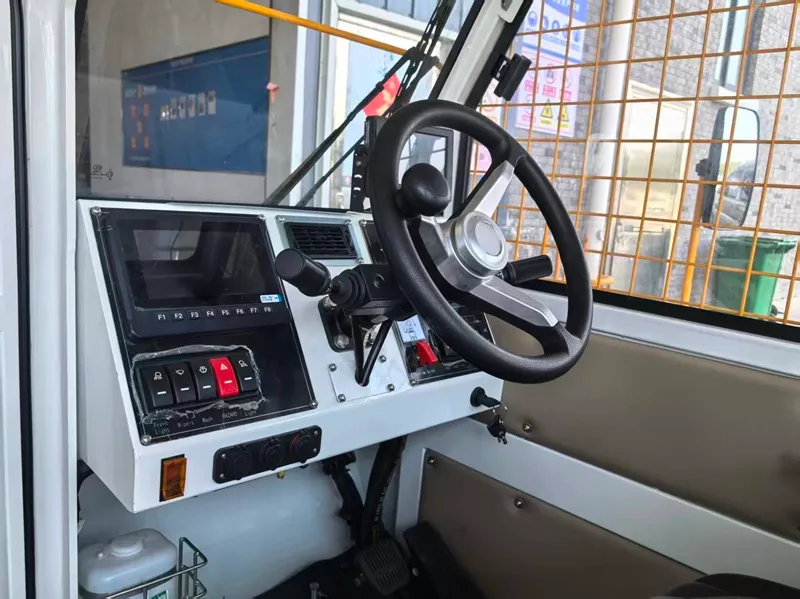
2. Display (HMI)
The display is used for human-machine interaction. It can show real-time vehicle status, fault information, battery condition, and parameter settings.
For operators, a clear and intuitive interface helps them quickly understand vehicle conditions, reduce operating errors, and improve convenience.

3.Motor Control and Drive System
The motor control system determines the vehicle’s power output performance, affecting towing force, acceleration characteristics, and energy consumption. A strong electric control solution allows the motor to automatically match output strategies under different working conditions, ensuring both dynamic response and energy efficiency.
4. BMS Battery Management System
The BMS monitors key battery parameters such as voltage, current, and temperature, preventing risks such as overcharge, over-discharge, and overheating while supporting battery health management.
For baggage tractors that need long continuous operation, battery management stability is extremely important.
5. Sensors and Actuators
These include throttle pedals, brake switches, gear inputs, steering feedback sensors, relays, contactors, and other execution components. Together, they form the input-output chain of the system and ensure accurate and reliable vehicle control.
What Are the Advantages of a Baggage Tractor Electric Control System?
Precise Power Control for Smoother Response
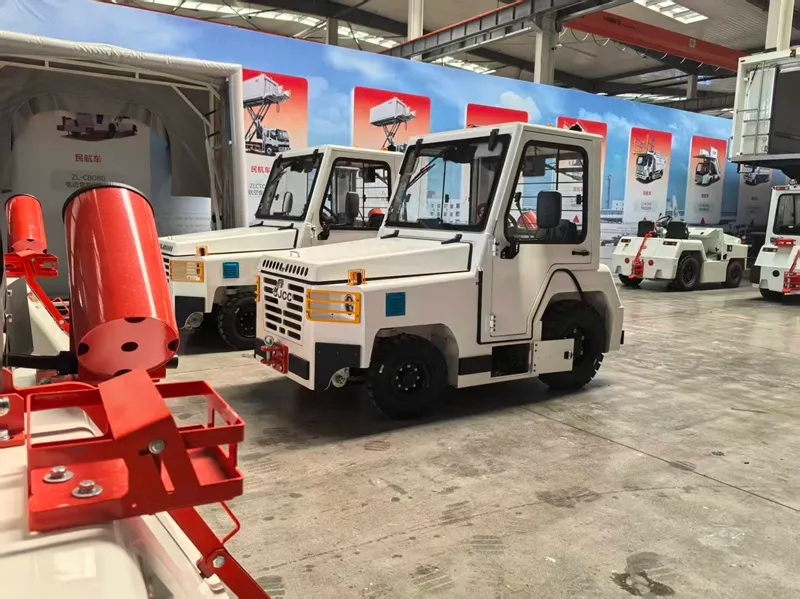
In logistics operations, baggage tractors need to start, stop, turn, and reverse frequently. If vehicle response is slow or power output is not smooth, it not only affects operating efficiency but may also create safety risks.
With intelligent VCU control algorithms, a high-quality electric control system can analyze all types of operating signals in real time and accurately regulate motor torque output, enabling smooth starting, stable acceleration, and precise control. This is particularly valuable in airport baggage transport, station short-haul transfer, and factory material handling.
Intelligent Energy Management for Longer Endurance
Under the electrification trend, customers are paying more attention to vehicle range and energy performance. A strong baggage tractor electric control system can integrate BMS data, monitor battery conditions in real time, and optimize the operating strategy of the power system and auxiliary functions according to actual working conditions.
This intelligent energy management approach not only extends operating time after each charge, but also helps lengthen battery service life and reduce total operating cost, making it ideal for logistics applications requiring long hours of continuous work.
Multiple Safety Protections for Full-Process Control
Baggage tractors usually operate in environments with dense pedestrian and vehicle traffic, so system safety is especially critical.
A mature control system can monitor vehicle status throughout the entire process and respond quickly to abnormal conditions.
For example, the system can monitor battery conditions to prevent risks such as overcurrent, over-discharge, and overheating.
At the same time, it can track vehicle operating parameters in real time and rapidly enter protection logic when abnormalities are detected, helping maintain safe and stable operation in complex environments.
Green Operation Aligned with Modern Logistics Trends
Compared with traditional fuel-powered equipment, electric baggage tractors offer clear advantages such as zero emissions and low noise.
An efficient electric control system further strengthens these advantages by optimizing energy consumption and control strategies, helping companies lower operating costs and reduce environmental impact.
For enterprises promoting green airports, smart logistics, and low-carbon factories, the electric control system is no longer just a control component. It is an important technical foundation for operational upgrading.
What Applications Is a Baggage Tractor Electric Control System Suitable For?
Airport Baggage Towing
Airports are one of the most typical application scenarios for baggage tractors. Vehicles must complete baggage towing, transfer, and dispatch within limited time windows, which places high demands on reliability, continuous operation capability, and control precision. A stable electric control system helps equipment operate efficiently in complex dispatch environments.
Railway Stations and Transportation Hubs
In railway stations and integrated transport hubs, towing vehicles are often used for material distribution, equipment towing, and short-distance transport. The electric control system enables more flexible speed control and vehicle handling, making it well suited for high-frequency, short-cycle operations.
Factory and Industrial Park Logistics
In industrial manufacturing, warehousing logistics, and large industrial parks, electric tractors are widely used for material transfer and internal distribution. By introducing an intelligent electric control system, enterprises can improve handling efficiency and support digital upgrades in vehicle management.
Why Is the Electric Control System a Key Upgrade Point for Baggage Tractors?
When companies select or develop baggage tractors, they often focus more on the motor, battery, or body structure. In reality, however, the electric control system is the key factor that determines the vehicle’s performance ceiling.
This is because the control system not only connects the powertrain and execution mechanisms, but also affects several critical indicators:
Whether vehicle handling is smooth
Whether energy consumption is optimized
Whether endurance can support long working hours
Whether fault diagnosis is timely and efficient
Whether safety protection is comprehensive and reliable
Whether the system can support future intelligent upgrades
For OEMs, adopting a more mature electric control solution can shorten vehicle development cycles and improve product consistency. For end users, it means lower failure rates, higher operating efficiency, and a better user experience.
How to Choose the Right Baggage Tractor Electric Control System
When selecting a baggage tractor electric control system, it is recommended to focus on the following aspects:
System Stability
The system should be able to adapt to complex operating conditions such as frequent start-stop cycles, heavy-load towing, and long-duration operation, ensuring stable vehicle output in real-world applications.
Functional Integration Capability
A quality solution should be able to integrate the controller, display, motor control, battery management, and communication interfaces, reducing system fragmentation and improving vehicle integration efficiency.
Safety Protection Capability
The system should include complete abnormal condition detection and protection logic, ensuring that the vehicle is monitorable, predictable, and controllable throughout operation.
Scalability and Customization Capability
Different customers and vehicle platforms often have different functional requirements, so the electric control system should also offer flexible configuration and expansion capability for future upgrades and adaptation.
Conclusion
With the continuous development of smart logistics and electric transport equipment, the baggage tractor electric control system is evolving from a traditional control module into the core platform for vehicle intelligence. It determines not only whether the vehicle can operate, but also whether it can operate smoothly, efficiently, safely, and for longer periods.
For airports, railway stations, factories, and industrial parks, a high-performance baggage tractor electric control system can significantly improve transportation efficiency, optimize energy management, strengthen safety protection, and support the transformation of logistics equipment toward a more intelligent, efficient, and environmentally friendly future.
If you are looking for an intelligent control solution for electric tractors, logistics transport vehicles, or special-purpose vehicles, choosing a mature and reliable electric control system will be a key step in enhancing overall vehicle competitiveness.