 Skip to content

Remote Operation in Mobile Machinery: Beyond Connectivity
Table of Contents
Remote operation is changing how construction equipment, agricultural machinery, and specialized off-highway vehicles are operated.
From excavators working in hazardous environments to forestry machines operating on steep terrain, remote control technologies allow operators to manage equipment from a safer location.
Major equipment manufacturers are already exploring these capabilities. Caterpillar’s Cat Command technology, for example, supports remote operation in selected mining and construction applications.
However, moving the operator away from the machine introduces an important engineering question: How can mobile machinery respond reliably to remote commands when the operator is no longer physically present?
The answer involves more than establishing a communication connection.
Remote operation can use wired or wireless communication, depending on the application and operating environment. Regardless of the communication method, a reliable system requires effective integration between communication equipment, onboard controllers, sensors, actuators, and operator interfaces.
Each component plays a role in processing commands, monitoring machine conditions, and responding appropriately to abnormal situations.
This article explores the electronic control architecture behind remote-operated mobile machinery and the key considerations for OEM engineers.
1. How Does Remote Operation Work in Mobile Machinery?
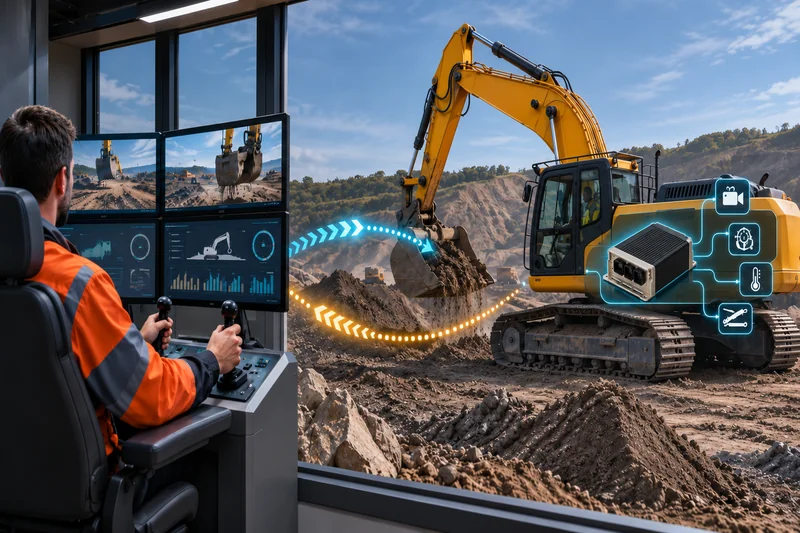
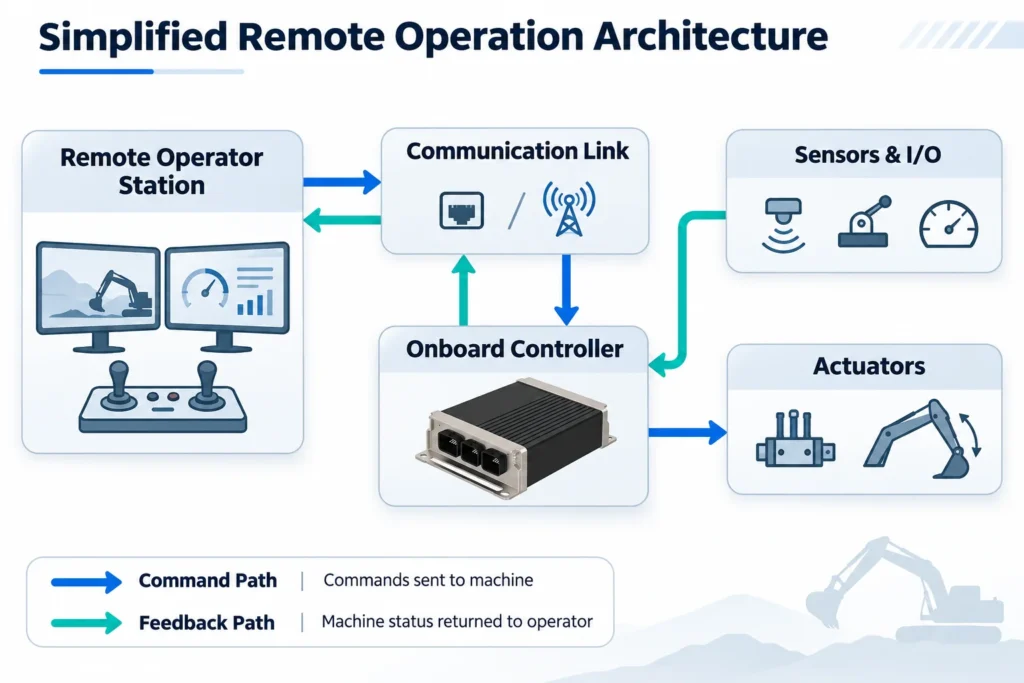
A remote-operated machine typically consists of two main parts: a remote operator station and an onboard machine control system.
The remote station allows the operator to send commands using joysticks, switches, or other input devices. These commands travel through a wired or wireless communication link to the machine.
Once received, the onboard control system processes the commands and controls the corresponding actuators. At the same time, sensors and electronic control units provide operating information that can be transmitted back to the remote station.
A simplified architecture includes two interconnected paths:
Command Path:
Remote Operator → Communication Link → Onboard Controller → Actuators
Feedback Path:
Sensors & I/O → Onboard Controller → Communication Link → Remote Operator
Together, these paths allow operators to issue commands and receive machine status feedback.
In practice, additional communication interfaces, gateways, or signal processing functions may be required depending on the system architecture.
Several electronic components support this process.
Mobile Controllers
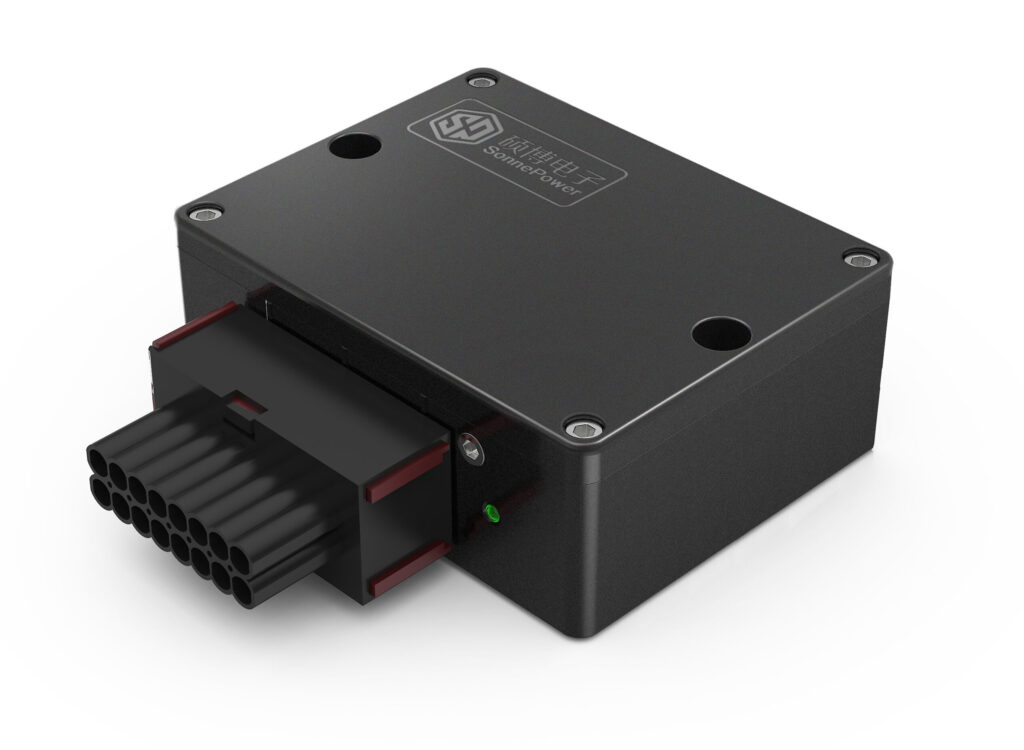
Mobile controllers execute application-specific control logic.
For example, when an operator requests an excavator boom movement, the controller may evaluate operating mode, hydraulic pressure, and relevant interlocks before generating the appropriate control output.
Depending on the system design, controllers may use PWM outputs, digital signals, or communication interfaces to manage connected devices.
The remote station requests an action, while the onboard control system determines how that action is executed according to its programmed logic and operating conditions.

Distributed I/O Modules
Sensors and actuators are often distributed across different parts of a machine.
Connecting every device directly to a central controller can increase wiring complexity and installation requirements.
Distributed I/O modules allow field devices to connect locally and exchange information with the main controller through a communication network.
This architecture can reduce long cable runs, simplify installation, and support modular machine designs.
CAN Communication
CAN bus is widely used for communication between electronic control units in mobile machinery. It supports the exchange of operating commands, sensor information, and diagnostic data.
For OEM engineers, CAN network design requires consideration of communication timing, network loading, diagnostics, and fault handling.
However, the communication protocol used between a remote operator station and a machine depends on the specific remote operation system. It should not be assumed to be the same as the onboard CAN communication protocol.
Together, these electronic components form an important foundation for modern mobile machinery control systems.
Three Critical Engineering Challenges in Remote Operation
Remote operation introduces additional engineering challenges because the operator and machine are physically separated.
Three areas are particularly important.
Maintaining Predictable Machine Response
In conventional onboard operation, the operator receives direct visual and physical feedback from the equipment.
Remote operation introduces additional communication and processing steps.
The time between an operator moving a joystick and observing the resulting machine movement may include:
- Operator input processing
- Remote command transmission
- Onboard controller processing
- Actuator response
- Video capture and transmission
- Remote display processing
This means overall responsiveness depends on the complete system rather than the controller alone.
It is also important to distinguish between the command-and-control path and the visual feedback path.
The command-and-control path determines how quickly an operating request reaches the machine and produces a response. The visual feedback path affects how quickly the operator can observe that response.
Latency refers to the time required for information or signals to travel through a communication or processing path.
Jitter describes variations in delay.
Excessive latency or inconsistent delays can affect an operator’s ability to control equipment precisely.
For applications involving hydraulic movement or other time-sensitive functions, OEM engineers should evaluate end-to-end system performance under realistic operating conditions.
Reliable machine response therefore requires coordination between communication systems, control software, electronic hardware, and mechanical or hydraulic components.
Providing Clear Machine Status Feedback
A remote operator cannot rely on every sensory cue available inside the machine cabin.
As a result, electronic monitoring and operator interfaces become increasingly important.
Depending on the application, a remote operation system may need to provide information about:
- Operating modes and control authority
- Hydraulic pressure and temperature
- Engine or motor status
- Sensor readings
- Communication status
- Equipment warnings and diagnostic information
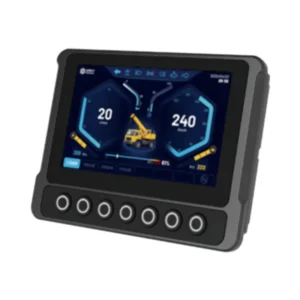
An HMI helps organize and display this information.
However, effective interface design is not simply about displaying more data.
It is about presenting the information operators need to understand machine conditions and respond appropriately.
For example, a communication fault or unexpected operating mode change may require immediate attention, while detailed diagnostic records may be more appropriate for maintenance personnel.
Clear status feedback helps operators understand what the machine is doing, whether commands have been accepted, and whether abnormal conditions require intervention.
Diagnostics and Maintenance
HMIs can also support troubleshooting and maintenance.
Instead of displaying only an error code, a diagnostic interface may identify the affected subsystem and provide useful operating information.
Depending on the application and available system data, maintenance personnel may be able to review sensor values, I/O status, and controller diagnostic records.
This can make fault identification more efficient and help maintenance teams understand machine operating conditions.
Reliability in Harsh Environments
Mobile machinery often operates under demanding environmental conditions.
HMI hardware may be exposed to vibration, dust, moisture, temperature fluctuations, and strong sunlight.
For OEMs, selecting an appropriate display requires consideration of:
- Ingress protection
- Screen readability
- Operating temperature
- Electromagnetic compatibility (EMC)
- Mechanical durability
A display suitable for indoor industrial use may not provide the same performance in outdoor construction or agricultural equipment.
These considerations remain important even when a machine also uses a separate remote operator interface.
Why HMI Design Matters in Remote-Operated Machinery
Human-machine interfaces play an important role in both conventional and remote-operated equipment.
Although an HMI is often associated with a display installed inside the cabin, its broader purpose is to help operators and maintenance personnel understand and interact with the machine.
Consistent Information Across Operating Modes
Some mobile machines support both onboard and remote operation.
This creates a need for consistent machine information across different interfaces.
For example, a machine may include an onboard display for local operation and a separate remote display for external control.
While the interfaces may have different layouts, important information such as operating mode, warning status, and control authority should remain consistent.
A well-designed electronic control architecture can help different interfaces access the same underlying machine status information.
Diagnostics and Maintenance
HMIs can also support troubleshooting and maintenance.
Instead of displaying only an error code, a diagnostic interface may identify the affected subsystem and provide useful operating information.
Depending on the application and available system data, maintenance personnel may be able to review sensor values, I/O status, and controller diagnostic records.
This can make fault identification more efficient and help maintenance teams understand machine operating conditions.
Reliability in Harsh Environments
Mobile machinery often operates under demanding environmental conditions.
HMI hardware may be exposed to vibration, dust, moisture, temperature fluctuations, and strong sunlight.
For OEMs, selecting an appropriate display requires consideration of:
- Ingress protection
- Screen readability
- Operating temperature
- Electromagnetic compatibility (EMC)
- Mechanical durability
A display suitable for indoor industrial use may not provide the same performance in outdoor construction or agricultural equipment.
These considerations remain important even when a machine also uses a separate remote operator interface.
Supporting Mobile Machinery Control with SonnePower
Reliable remote operation requires effective integration between communication systems, onboard controllers, sensors, and operator interfaces.
SonnePower provides programmable controllers, HMI displays, distributed I/O modules, and CAN keypads for mobile machinery applications.
These components can be integrated into application-specific electronic control architectures.
Programmable Mobile Controllers
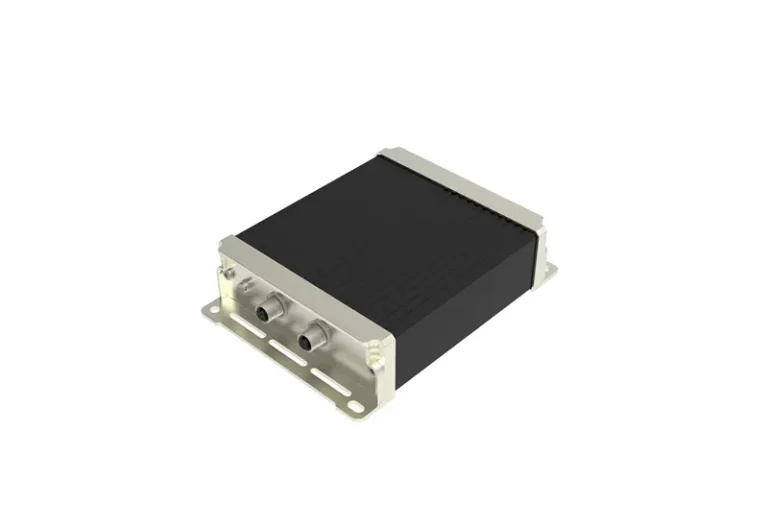
For example, the SonnePower SPL0601 programmable controller offers:
- 66 physical I/O channels
- Three CAN interfaces
- PWM output capabilities
- CODESYS 3.5 programming support
These capabilities allow OEM engineers to develop application-specific control logic, process sensor inputs, and communicate control commands to compatible devices.
Depending on the system configuration and connected interfaces, the controller can participate in the control of hydraulic or other machine actuators.
The actual implementation depends on the communication architecture, connected equipment, and application software.
Rugged HMI Displays
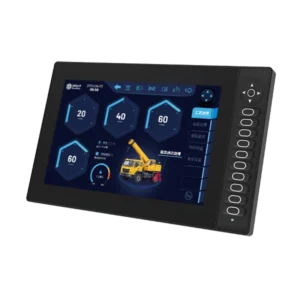
The SonnePower SPD-101-H1x HMI features:
- 10.1-inch display
- 1280 × 800 resolution
- 900 cd/m² brightness
- Five CAN interfaces
- Four AHD video inputs
It can serve as a local interface for monitoring machine status, displaying available diagnostic information, and viewing compatible onboard camera feeds.
For equipment with remote operation capabilities, a separate remote display or operator station may be used to present relevant machine information.
The onboard HMI and remote interface perform different roles within the overall system architecture.
Integrating Electronic Control Components
Together with distributed I/O modules, these components can support a modular CAN-based control architecture for construction equipment and other off-highway machinery.
For example, in a hypothetical remote-operated excavator architecture, the SPL0601 could process remote control requests received through an appropriately designed communication interface.
Based on application logic and system conditions, it could then issue control commands to compatible connected equipment.
Meanwhile, the SPD-101-H1x could provide local machine monitoring, available diagnostic information, and camera display functions.
Remote communication equipment, remote video transmission, control authority management, and safety-related functions would need to be addressed as part of the complete system design.
This example illustrates a possible component integration approach rather than a pre-validated complete remote operation solution.
SonnePower helps OEM engineers develop flexible electronic control architectures for increasingly connected and intelligent mobile machinery.
Conclusion: Remote Connectivity Is Only the Beginning
Remote operation is changing how operators interact with mobile machinery.
However, the fundamental requirements of machine control remain unchanged.
Equipment must interpret commands correctly, monitor operating conditions, control actuators, and respond appropriately to faults.
Whether a remote operation system uses wired or wireless communication, connectivity alone does not guarantee reliable machine behavior.
Predictable operation depends on the coordination of communication systems, control logic, electronic hardware, mechanical systems, and operator feedback.
For OEMs developing the next generation of construction equipment, agricultural machinery, and specialized vehicles, mobile controllers, HMI displays, distributed I/O modules, and CAN communication remain important building blocks.
By selecting appropriate components and designing around clearly defined operating requirements, manufacturers can create a stronger foundation for connected and intelligent mobile machinery.