 Skip to content

J1939 Diagnostics for Construction Equipment: Fault Codes and Downtime
Table of Contents
Construction equipment downtime often starts before the machine fully stops. In many cases, the machine has already reported a fault through its electronic system, but the message was not easy to understand or act on.
SAE J1939 is the CAN-based standard widely used in heavy-duty systems, and its diagnostic services include messages such as DM1 and DM2.
For construction equipment, diagnostics are not only about repair. They are also about uptime, jobsite efficiency, and faster maintenance decisions. Remote fault visibility is often used specifically to assess severity earlier and reduce costly downtime.
Why J1939 diagnostics matter in construction equipment
A construction machine usually involves multiple ECUs working together. Engine, hydraulic, sensor,keyapd, and control-related information all move through the network rather than staying isolated in one device. That makes diagnostics part of the overall machine workflow, not just a service feature.
Downtime in construction equipment is expensive because it affects more than repair time. It can delay projects, interrupt operators, and increase service dispatch costs. That is why equipment makers and service organizations frame diagnostics as an uptime tool.
The practical question is not only, “What code is this?” The real question is, “Should the machine stop now, keep working, or be serviced soon?” That decision layer is where good diagnostics create real value.
What a J1939 fault code actually contains
The most important active diagnostic message in J1939 is DM1. DM1 is defined in J1939-73 and is used to report active faults on the network. It is broadcast by the source ECU and can be received by other ECUs or diagnostic tools.
DM2 is different. It is used for previously active or historical faults that are no longer active but are still stored for diagnostic purposes. This makes DM2 useful when technicians want to understand whether a problem has been recurring over time.
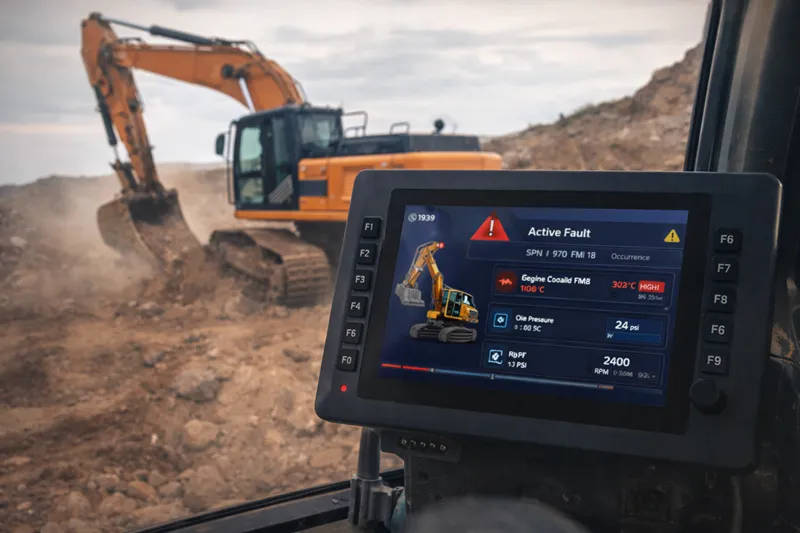
A typical J1939 fault code contains more than one value. The key fields usually include SPN, FMI, and Occurrence Count, along with lamp-related status. Together, these fields help describe what subsystem is affected, what type of failure occurred, and how often it has happened.
This is why a fault code should not be treated as a single number. A useful diagnostic view should show the fault in a way people can interpret quickly. Raw code visibility is only the first step.
Why fault codes alone do not reduce downtime
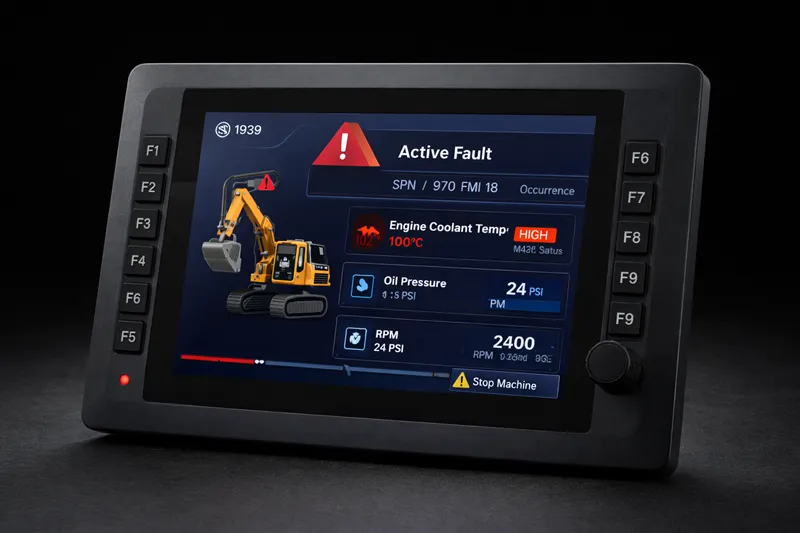
A good diagnostic interface should answer three questions quickly. What is wrong, how serious is it, and what should happen next? If the screen cannot support those decisions, fault visibility still has limited operational value.
How to triage J1939 faults in construction equipment
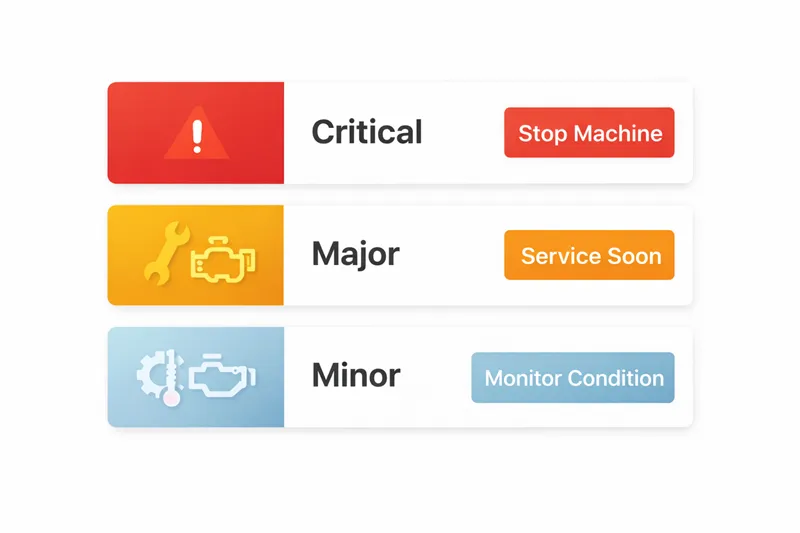
Not every fault should trigger the same response. In practice, construction equipment teams need a simple severity model for field decisions. One useful structure is Critical, Major, and Minor.
Critical faults are the ones most likely to affect safety, engine protection, or core machine functionality. In those cases, stopping the machine or performing a controlled shutdown may be the right decision. Warning-related lamp status can help support that judgment.
Major faults may allow the machine to finish the current task or move to a safer position. However, they should still trigger service planning very soon. This is where better diagnostics can reduce downtime by avoiding both late reactions and unnecessary full shutdowns.
Minor faults still matter, but they may be better handled through logging and trend monitoring. Instead of stopping the machine immediately, the better response may be to monitor repeat occurrence and schedule service later. Historical diagnostic data is useful in making that distinction.
For construction equipment, the likely impact also depends on the affected system. Engine and powertrain faults often carry higher urgency, while hydraulic, sensor, and communication faults may require different diagnostic logic. Teams should avoid assuming every code means a failed part.
How to read J1939 diagnostics on a display or service tool
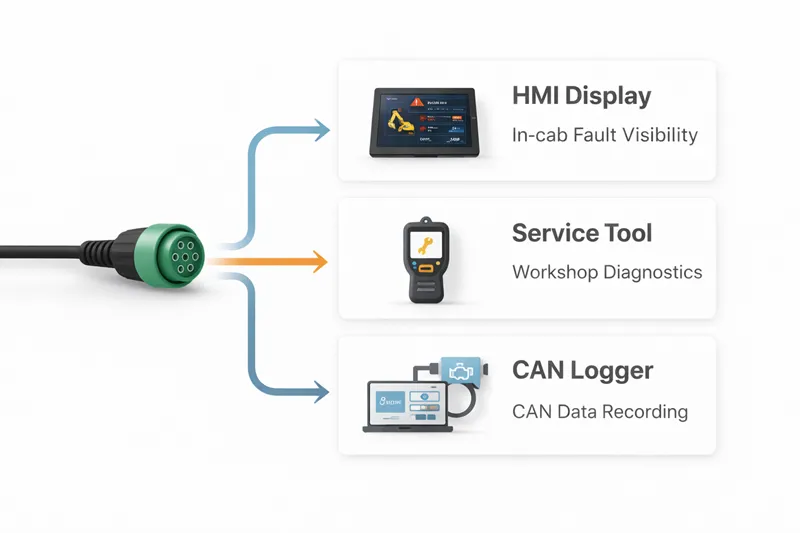
J1939 diagnostics are commonly accessed through the standard diagnostic connector.
Different tools serve different purposes. A service tool is better for deep troubleshooting and code-related workshop work.
A CAN logger is better for data capture and later analysis, while an HMI is better for real-time fault visibility in the machine.
That difference matters when designing a diagnostic screen. A display does not need to replace a full dealer tool, but it should give the operator or technician enough information to act quickly. In most cases, that means showing more than raw SPN and FMI values.
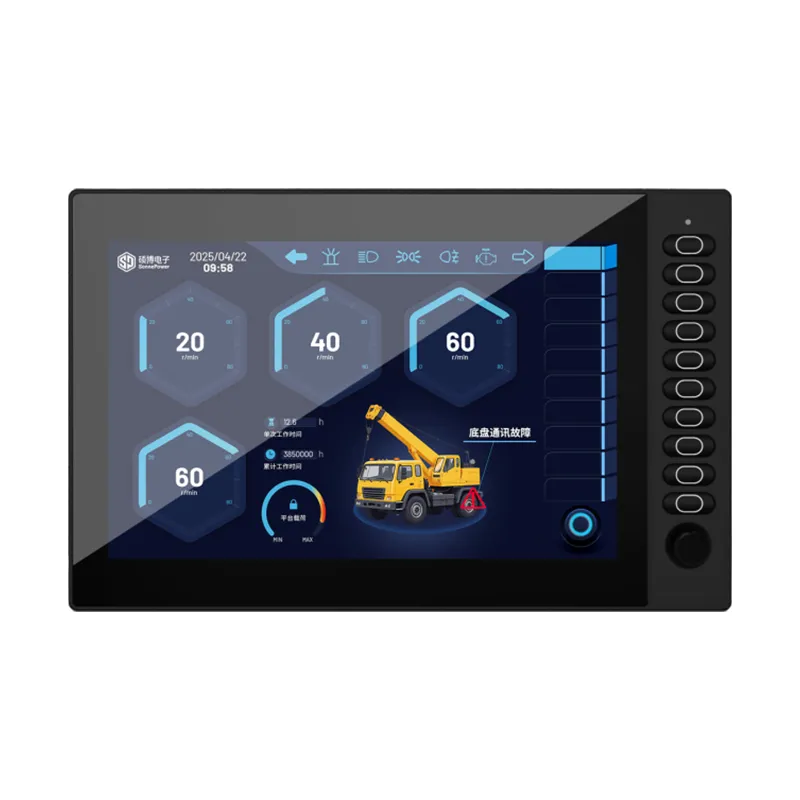
A stronger HMI fault page should usually include a readable description. It should also show severity, source subsystem or ECU, and a clear action suggestion. That kind of presentation makes diagnostics faster to use in real jobsite conditions.
Why some faults are easy to read and others are not
Standard J1939 diagnostics make integration easier, but they do not solve every interpretation problem. Some brands still rely on manufacturer-specific logic or machine-specific code interpretation.
This is important for OEMs designing displays. Standard J1939 support is a strong foundation, but it does not guarantee that every machine-specific condition will be fully explained by a generic tool. In many projects, standard decoding must be combined with machine-specific mapping.
How better diagnostics help reduce downtime
Better diagnostics improve fault identification speed. They also help service teams prepare earlier and avoid unnecessary site visits. Deere and Cat both present connected diagnostics and fault visibility as ways to support proactive service and reduce interruptions.
Remote DTC workflows strengthen this further. Remote DM1 and DM2 reading as a way to detect component failures early, assess severity, and prevent costly downtime. That makes diagnostics part of maintenance planning, not just fault reaction.
Historical fault information also matters. DM2 and repeat occurrence patterns can help teams distinguish between a one-time event and a recurring issue. That distinction is important if you want to avoid both over-maintenance and unexpected failure.
What OEMs should consider when designing a J1939 diagnostic interface
If an OEM is building a J1939 display for construction equipment, the goal should not stop at reading DM1. The real goal is helping operators and technicians make faster, better decisions. That means the interface needs to be readable, practical, and action-oriented.
At a minimum, the screen should support active faults and stored faults. It should provide clear fault descriptions, visible severity, and simple next-step guidance. That is the level of usability modern users increasingly expect from machine interfaces.
The diagnostic layer should also be flexible. It may need to integrate machine-specific translations, telematics, controller logic, or even other interface elements such as camera-based workflows. A programmable HMI is often a better fit than a rigid code-only display in these cases.
Conclusion
J1939 diagnostics are useful because they turn machine faults into structured information. But structured information alone does not reduce downtime. Downtime is reduced when that information is presented in a way that helps people decide what to do next.
A better diagnostic interface should help users understand the fault, its severity, and the likely action required. When that happens, DM1, DM2, SPN, and FMI stop being just protocol terms and start becoming real uptime tools. For construction equipment, that is where diagnostic value becomes operational value.